


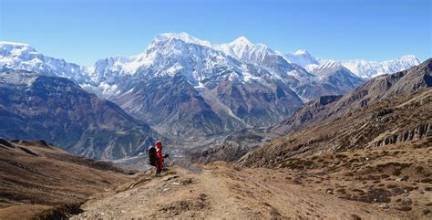
Nar Phu Valley Trek-13 Days


13 Days
Trip Duration
Difficulty
Moderate
Activities
Trekking
Group Size
minimum 2 People
Max. Altitude
5240m./17192ft.
Destination
Nepal
Best season
April-May and Sept-Nov
Meals
- 12 Breakfast
- 11 Lunch
- 10 Dinner

Accommodation
- 3-star hotel
- Guesthouse

Transportation
- private vehicle

Highlights of Nar Phu Valley Trek-13 Days
- Tour the remote, culturally diverse, deep valleys of Nar and Phu.
- Pass the magnificent Kang La Pass at (5,240 m / 17,191 ft), enjoying a panoramic view of the Himalayas.
- Get a taste of the real Tibetan-inspired mountain culture in the traditional villages.
- Tour ancient monasteries, such as the historic Tashi Lhakang, in Phu Valley.
- Hike across scenic mountain ranges and forests, rocky canyons, suspension bridges, and yak pastures.
- Get a less hectic trekking experience not on the mainstream Nepal trails.
- Walk beneath Himlung Himal (7,126m), Kang Guru, and Annapurna II as the trail narrows through deep gorges and pine forest
- Descend into Ngawal and Manang, rejoining the classic Annapurna Circuit for a completely different high-desert landscape
Why Choose Hike Holiday Treks for Nar Phu Valley Trek ?
- Free Airport Transfer to and from airport .
- Online pre- trip brief and booking confirmation for the best preparation for your tour
- Multiple communication ways like Whatsapp, Viber , Email, Phone, Facebook-messenger, Wechat .
- 24/7 customer support available +9779851352528.
- Easy and save payment process by cash, card and bank transfer
- provide you essential medical kit carried by guide with oxgymeter for measurement of oxgyen time to time at high altitude.
- Free luggage store facility for you

Need help? Talk to travel expert
Nar Phu Valley Trek-12 days
Trip Overview of Nar Phu Valley Trek-13 Days
The Nar Phu Valley Trek is among the best of the remote trekking treks in Nepal as it is the ideal blend of mountain sightseeing, cultural exploration, and off-road adventure. It is a trek in the limited area of the Annapurna, through the remote valley of the Himalayas, where some of the last remaining of the Tibetan-influenced cultures have managed to retain their way of life, culture, and ancient practices over the years. The journey, as compared to the Nepal trekking routes, is less crowded and provides serene trails, village life, and a scenic landscape without the hustle and bustle of tourists on the busiest routes.
The journey will start with a picturesque ride out of Kathmandu to the Annapurna area, then through the secret valleys of Nar and Phu. Trekking along the route, one can cross forests, suspension bridges, trails along the rivers, canyons, remote settlements, monasteries, yaks grazing fields, and high-mountain areas. Such villages as Phu and Nar are a rare chance to experience the traditional life of the Himalayas in one of the least-explored areas of trekking in Nepal.
The crossing of Kang La Pass at (5,240 m / 17,191 ft) is one of the greatest highlights of the trip, which has stunning panoramic views of Annapurna II, Gangapurna, Tilicho Peak, and the surrounding Himalayan ranges that compensate for the efforts. The walk is a moderate to difficult day-by-day walk mixed with acclimatization days, and thus it is feasible for those well-prepared trekkers who want to have an adventure besides the normal trails.
Local teahouses primarily accommodate, where simple comfort and warm hospitality are provided during the journey. The food is simple yet nutritious, and even the trekking meals are common even in the remote villages. The area is limited, and thus permits and planned arrangements are required, which is why a large part of travelers select reliable travel agencies such as Hike Holiday Trek to facilitate their logistics and professional assistance.
Nar Phu Valley Trek is a trek that can be enjoyed by people who seek more than mountain scenery. It provides culture, wilderness, physical challenge, and the feeling of exploration of the real Himalaya. Comprising old monasteries and remote villages, dramatic high passes and untouched sceneries, this trek will be a distinct experience that will seem both adventurous and incredibly authentic.
About the Trek
Nar Phu Valley Trek is a remote trekking route of the Annapurna region in Nepal that traverses the untouched valleys of Nar and Phu. It is an adventure that brings the trekkers to the classic Himalayan villages, ancient monasteries, rugged mountain paths, and glorious alpine scenery. The path gets to Kang La Pass (5,240 m / 17,191 ft), which provides excellent mountain views. The trail is less crowded and more culturally true, compared to the popular trekking trails.
Simple teahouses are accommodated, and the trek needs limited area permits. It would be most appropriate to serve the trekkers who want adventure and experience the Himalayan culture, enjoy less traffic, and the Himalayan environment, challenging and yet with a memorable natural beauty.
Why This Trek
The trek is ideal for those interested in a real Himalayan adventure that is not on the well-worn trekking trails. The Nar Phu Valley Trek is one trip that incorporates dramatic mountainous landscapes, remote scenery, and rich Tibetan-inspired culture. This path is not congested with overcrowded trails, but there is calmness, isolation, and the rural village life. The Kang La Pass (5240 m, 17191 ft) crossing gives excitement and rewarding panoramic views.
The trip also has an acclimatization period, making the trip less dangerous and easier to handle. In case you are culturally curious, like to have an extreme adventure, and like to visit less-visited areas, then this trek is a memorable experience that can be considered adventurous, meaningful, and quite unlike the more commercial trekking paths in Nepal.
Detail Itinerary of Nar Phu Valley Trek-13 Days
Day Day 1: Arrival and Transfer to the Hotel in Kathmandu
Your trip starts with you arriving in Kathmandu at an altitude of 1,300 m / 4,265 ft. The Kathmandu flight is usually an unforgettable event as it gives you a gorgeous sight of the Himalayan mountains, green hills, terraced farmlands, and the scattered villages down below. Upon arrival, you will undergo formalities at the airport and pick up your luggage. On arrival at the airport, a company representative will receive you and take you in a comfortable way to your hotel. Once you have checked in, you will be able to rest and get over your journey.
You will attend a welcome dinner at the hotel in the evening. This is when you also get a trek briefing, where your guide or trek leader will discuss the Nar Phu Valley Trek, key preparations, and helpful information about the days to come. You are able to get any last questions answered so that you are well prepared to go out on the adventure.
Activity & Duration
30 minutes driveHighest Altitude
1335m. (Kathmandu)Meals
Breakfast includedAccommodation
3- Star HotelDay Day 2: UNESCO World Heritage Sightseeing in Kathmandu
This day, you are going to visit some of the most popular cultural and religious sites in Kathmandu at (1,300 m / 4,265 ft). Start your sightseeing with Pashupatinath Temple, which is considered to be one of the most sacred Hindu temples in Nepal, not only by Hindu but also by Buddhists.
In this case, traditional life and religious practices in temples can be seen along the coast of the river. Then, you will be taken to the Boudhanath Stupa, which is considered to be one of the largest Buddhist stupas in the world, where pilgrims and locals walk in quiet circles around the monument, spinning prayer wheels.
Providing time, you could also come to visit Swayambhunath or the Monkey Temple, and visit the ancient Kathmandu Durbar Square and its ancient streets. Your trekking guide will meet you later in the day in order to get final preparations, check equipment, and give a briefing on your Nar Phu Valley adventure, which will begin the next morning.
Activity & Duration
4-5 hours s/sHighest Altitude
1335m. (Kathmandu)Meals
Breakfast includedAccommodation
3-star hotelDay Day 3: Drive to Koto
It is a long but beautiful day of travel today, you leave Kathmandu and drive southward to Kota at (2,600 m / 8,530 ft), the entrance to Nar Phu Valley. We will start along the Prithvi Highway, tracing the Trishuli River across charming terraced fields, villages on the hills and the mountainous landscape. The peaks that you might get to see in the drive include the Ganesh Himal and Manaslu. The trip continues on a rugged mountain road in a four-wheel drive jeep after arriving at Besisahar.
This section of the path is far rougher, composed of rocky paths, bumps and winding tracks that track parts of the old Annapurna Circuit path. The routes are made interesting by the transforming landscapes as the journey progressively becomes more rural and mountain-like. In the evening, you will reach Kota, where the official part of your trek will commence. You will be sitting in a cozy teahouse and get ready to start the day of trekking.
Activity & Duration
9-10 hours driveHighest Altitude
2600m. (Kota)Meals
Breakfast, Lunch and Dinner includedAccommodation
GuesthouseDay Day 4: Trek from Koto to Meta (3560m | 11,679 ft), Distance: 13 km, Duration: 5-6 hours
Today is the official start of your trekking adventure when you depart Kota and head by hiking to Meta at (3,560 m / 11,680 ft). Before continuing, your trekking permits for the restricted Nar Phu region will be checked. The route runs along the riverbank through lovely pine forests, over suspension bridges spanning running rivers, over falls and through small local villages. The trail provides a serene mountainous environment as you slowly shed the lower forested regions. The trail steepens and the forest begins to clear as you go farther on, revealing broader vistas of the mountains.
Higher elevations will reveal spectacular peaks like Annapurna II and Lamjung Himal. The last part consists of a gradual rising mountain pass that ends in Meta, a remote village on a level plateau with scenic Himalayan views. Once you get to Meta, you could spend some time in a teahouse, appreciate the mountain scenery, and prepare for the days ahead, where you are going to be up at higher altitudes.
Activity & Duration
5-6 hours hikeHighest Altitude
3560m. (Meta)Meals
Breakfast, Lunch and Dinner includedAccommodation
Overnight at GuesthouseDay Day 5: Trek from Meta to Phu Village (Phu Gaon 4250m | 13,943ft) Distance: 10 km, Duration: 5-6 hours
The current journey brings you further into the isolated Nar Phu area as you trek from Meta to Phu Valley (4,080 m / 13,386 ft). The trail is a mountain path through rough mountainous terrain that has both gradual climbs and descents on open ridges. In the day, you will experience vast landscapes of the empty villages of the Himalayan region and ancient Tibetan style villages. The trail proceeds along the Phu Khola after going through suspension bridges and small villages like Chyaku and Kyang.
It is a remote area that is supported by its pure culture and dramatic landscape. You can even see blue sheep by the rocky hillsides, should you be lucky. When you come to Phu, you will go through the beautifully carved village gate, and you will be in one of the most traditional Himalayan villages in Nepal.
Once in the village, you can sightsee and have a look at Tashi Lhakhang Monastery, which is a religious facility that has magnificent views of other surrounding mountains, such as Himlung Himal.
Activity & Duration
6-7 hours hikeHighest Altitude
4250m. (Phu Village)Meals
Breakfast, Lunch and Dinner includedAccommodation
Overnight at GuesthouseDay Day 6: Eploration day
It is a special acclimatization day in Phu Valley to allow your body to acclimatize to the higher altitude. You will not carry on the main trek but will spend the day exploring this wonderful Himalayan village and its environs. Phu is characterized by its small stone streets, old Tibetan culture, and tranquil life in the mountains. You can see the local people in their daily activities, such as spinning sheep and yak wool, making the traditional food products, and taking care of the animals.
This is a unique experience of the real mountain life without any modern development. When you feel fit, and the weather is good, you can make a side trail to Himlung Himal Base Camp, where you go to much higher altitudes and get to know glacier-covered areas and mountain climbs. The increase also provides an opportunity to view mountain wildlife in the region. You will then visit your teahouse in Phu, where you will spend another night.
Activity & Duration
4-5 hours hikeHighest Altitude
4250m. (Phu valley)Meals
Breakfast, Lunch and Dinner includedAccommodation
Overnight at GuesthouseDay Day 7: Trek from Phu to Nar Phedi, Distance: 9 km, Duration: 4-5 hours
You start your trek from Phu Valley today and move towards Nar Phedi Monastery at (3,490 m / 11,450 ft). The path goes down the same dramatic mountain scenery, with the same village names that are known, like Kyang and Upper Chyako. In between, you will still be enjoying the remote charm of the Nar Phu region, and the rocky valleys, dry hills, and traditional settlements, with Tibetan cultural influence. Then, abandoning the higher valley, the path finally leads to Nar Phedi, where you will be quartered close to the monastery, rather than in an ordinary mountain village.
This special stay with its overnight is a serene spiritual experience. The monastery is characterized by a friendly atmosphere and plain yet clean rooms. When there is time, you can see the religious practices that are practiced daily by the resident nuns, and the prayer chants and the use of incense will be an unforgettable experience. This less busy day is also a way of allowing your body to rest before the next leg of the journey.
Activity & Duration
4-5 hours walkHighest Altitude
4000m. (Nar Phedi)Meals
Breakfast, Lunch and Dinner includedAccommodation
Overnight at GuesthouseDay Day 8: Trek from Nar Phedi to Nar Village (4110m | 13484 ft) Distance: 3 km, Duration: 2-3 hours
Today’s trek takes you from Nar Phedi up to Nar Village at (4,110 m / 13,484 ft). It starts by crossing over suspension bridges across raging rivers, and the path steadily ascends over barren Himalayan terrain. This area is more open, dry and isolated, and the panorama of rocky mountainous hills and yak grazing fields is vast compared to the greener lower valleys. As you go up the trail, you will pass by lines of traditional chortens in Tibetan style, which contribute to the beauty of the mountainous landscape.
As you ascend further, you get to see the amazing scenery of the other peaks around, such as Pisang Peak, in the distance. Arriving at Nar Village, you will come across yet another Himalayan village where people still live in the same way as their ancestors did. Throughout the day, villagers can be spotted weaving wool to form rugs and blankets, and performing their daily tasks. Your night teahouse is just outside the village, where you can have a hot meal and rest before the daunting Kang La Pass crossing.
Activity & Duration
3-4 hours hikeHighest Altitude
4110m. (Nar Village)Meals
Breakfast, Lunch and Dinner includedAccommodation
Overnight at GuesthouseDay Day 9: Trek from Nar Village to Kang La Pass (5,320m | 17454 ft), then to Ngawal (3650m) Duration: 17 km, Distance: 7-8 hrs
This day is one of the toughest and most gratifying days of the trek. You will start at an early morning at Nar Village and walk to Kang La Pass at (5,320m / 17,454ft) and then start to descend to Ngawal. The path ascends gradually through the rocky mountain, past the feeding grounds of the yaks and the lateral moraine of the Temdenzon Khola. The higher you climb, the thinner the air becomes, and the harder the climb becomes, but the mountain view is all the more amazing.
Kang La Pass will provide you with stunning views of Annapurna II, Tilicho Peak, Gangapurna, and other Himalayan sceneries. The trail then, after some stay at the pass, goes steeply down towards Ngawal, where the scene is quite different. Ngawal seems more advanced than the isolated villages of Nar and Phu, where there are bigger lodges, more options to eat, and WiFi and phone networks are available in most locations. You will spend the night in a nearby teahouse after this lengthy and strenuous crossing.
Activity & Duration
8-9 hours hikeHighest Altitude
5320m. (Ngawal)Meals
Breakfast, Lunch and Dinner includedAccommodation
Overnight at GuesthouseDay Day 10: Trek from Ngawal to Manang (3540m| 11614 ft) Distance: 8 km, Duration: 3-4 hours
The trek from Ngawal to Manang is the second part of our trip. It is part of the Annapurna Circuit trek in Nepal. It’s a relatively gentle trail that takes about 3–5 hours. The trail winds through juniper bushes, pine forests, and arid landscapes, with views of the Annapurna III and Gangapurna mountains, passing by traditional Manang and Gurung villages.
Major highlights of the day are passing Sher Gompa and other surrounding settlements. Along the way to Manang, we encounter Milaperpa’s cave, where the Tibetan Buddhist yogi (11th-century Tibetian yogi and poet) and teacher are said to have lived.
Continuing our journey, we pass through Braga Gompa (900 years old), Braga Gompa in Braga village, Gompa of Godzo, and finally Ghatte Khola (river). We will reach Manang village (3,540m). Manang town is simply the paradise for trekking and a hub for trekkers. It is one of the important villages during the trip and has many gompas to visit.
Activity & Duration
2-3 hours hikeHighest Altitude
3540m. (Manang)Meals
Breakfast, Lunch and Dinner includedAccommodation
Overnight at GuesthouseDay Day 11 : Trek from Manang to Pisang and Drive to Dharapani or Besisahar
Today, you descend the Manang to Pisang. The air becomes warmer as you lose altitude and the arid mountainous terrain slowly transforms into greener scenery. The path gets softened, and a path leads to broad valleys with alternating landscapes.
It will take you past a lake close to Pisang, where you will have lunch. It is an enjoyable time to relax and have a lower mountain experience after several days in the remote high-altitude landscape. The trekking part will conclude after lunch, then you will be driven by a Four-Wheel Drive vehicle to take the road journey towards Dharapani or Besisahar as per the travel plans and the road conditions. The day is a mixture of walking and driving, with the transition between trekking in the distant Himalayas and the more accessible regions with improved transport links.
Activity & Duration
5-6 hours hikeMeals
Breakfast, Lunch and Dinner includedAccommodation
Overnight at GuesthouseDay Day 12: Drive back to Kathmandu
You leave the mountain area today and start the journey back to Kathmandu. The motivation is along picturesque roads through the valley of rivers, old villages, and terraces. First, the road runs along the Marsyangdi River and then it crosses the Trishuli River on its way back to the capital. Though the road may be long, dusty and physically exhausting in parts, the ever-changing landscape makes the journey interesting. You will go through hillsides with farms, village settlements and roadside villages that mirror the lifestyle in rural Nepal.
As you keep on going, you will slowly get back to the busier world around Kathmandu, into the valley between the hills at Thankot. You can finally experience the comforts of modernity when you reach Kathmandu, where you can take a hot shower, have a comfortable stay, and have a relaxing evening. It includes a farewell dinner where you have an opportunity to celebrate your successful completion of the Nar Phu adventure.
Activity & Duration
8-9 hours DriveHighest Altitude
1335m. (Kathmandu)Meals
Breakfast, Lunch and Dinner includedAccommodation
3 star hotelDay 13: Departure Day
It is the last day of your adventure in Nepal. Once you have eaten breakfast, you have some time to prepare to leave, to pack, and to look back at the memorable experiences of the Nar Phu Valley Trek. It ends with the cultural marvels of Kathmandu to the distant mountain hamlets, mountain passes, monasteries, and the Himalayan landscapes in a memorable end to the adventure. As per your flight plan, you will be picked up from your hotel and dropped off at Kathmandu International Airport.
It is advisable to arrive several hours before the departure time and carry out the airport activities in a comfortable manner. This last day is easy and casual, allowing you to part ways with Nepal after an amazing adventure in trekking. The team hopes that you have a safe trip back home and depart with good memories of the mountains, local culture, and the beauty of the Nar Phu region, which is unique.
Activity & Duration
30 minutes driveHighest Altitude
1335m. (Kathmandu)Meals
Breakfast includedIncludes and Excludes
What is included?
- All ground transportation in a private vehicle, including airport pickup and drop off.
- Three nights’ accommodation with breakfast at a 3-star category hotel in Kathmandu
- Kathmandu city tours, including tour guides and private vehicles
- Full-board meals (breakfast, lunch, and dinner) during the trek
- Best available twin-sharing lodge-to-lodge accommodation during the trek
- One highly experienced, helpful, and friendly guide, porter (1 porter for 2 people), and their food, accommodation, salary, equipment, and accidental insurance for all staff
- Kathmandu – Dharapani transportation by private car
- Hike Holiday Treks duffle bag, down jacket, and sleeping bag during the trek
- Hike Holiday Treks T-shirt, trekking map, and trip achievement certificate
- First aid medical kit
- Annapurna conservation permit fee and Nar Phu special trekking permits
- TIMS Fee- Trekkers’ Information Management System (Please bring 2 passport-size photos for permit)
- Government taxes & office service charge
Cost Excludes
What is excluded?
- International flights
- Nepal visa fees
- Travel insurance
- Personal trekking gear
- Lunch and dinner at Kathmandu.
- Snacks, drinks, and personal expenses.
- Hot shower, charging, and internet charges.
- Tips for guide and porter
- Delayed extra nights in the hotel.
- Emergency rescue costs and medical costs.
- Not included in optional activities.
- Other services that are not listed include.
Trip Information
Trip Information
Best Time
Nar Phu Valley Trek can be undertaken best in spring and autumn when the weather is generally favorable, and the mountain views are clear. The spring (March-May) is a pleasant period, with forests of rhododendron in flower, and more daylight. Autumn (September to November) is a cool season with dry trails and clear visibility following the monsoon season. The winter becomes colder, particularly at elevated areas such as Kang La Pass (5,240 m / 17,191 ft), where snow may make walking hard.
The rainy season is also characterized by dirty roads and transport delays. Selecting an appropriate season will ensure the trip is less risky and more pleasant. It is due to these months that many trekkers schedule their Nar Phu Valley Trek itinerary to enjoy an overall great trekking experience.
Distance and Elevation
Nar Phu Valley Trek is a remote part of the Annapurna region that has diverse walking paths and a significant change of elevation. The trek typically spans a range of 90 to 110 kilometers on foot (not including driving), depending on the specific route. The path begins with lower settlements and ascends slowly up the distant valleys to the summit of Kang La Pass (5,240 m / 17,191 ft).
Villages like Phu sit at (4,080 m / 13,386 ft), while Nar is located at (4,110 m / 13,484 ft). Due to these increases in elevation, it is significant to acclimatize appropriately. The path is a mix of cultural villages, rocky mountainous terrain, river crossings, and mountain Himalayan landscapes, and the trek is both physically and visually rewarding.
Difficulty and Altitude Sickness
The Nar Phu Valley Trek is rated as not very hard, but moderately hard due to its isolated paths, extent of walking time, and altitude level. Although the routes do not involve any technical climbing, they may involve steep climbs and descents, which may be physically challenging. The most serious issue is altitude sickness above 3,500 m / 11,483 ft), where the air is thinner.
Symptoms could be headache, fatigue, nausea and breathlessness. Rest days and slow uphill are beneficial in mitigating these hazards. It is also important to drink plenty of water and walk at a regular pace. Trekkers are advised to be body-conscious. Proper planning will make the journey more comfortable, safe and much more enjoyable in the high Himalayan setting.
Minimum and Maximum Walk Per Day
The number of walking hours on the trek will depend on the route, weather, and acclimatization program. During easier days, it can take approximately four to five hours to walk, particularly between shorter stretches of villages. Days that are longer and/or more challenging, like the Nar Phu Valley Trek across Kang La Pass, may last eight or nine hours or longer. The range of walking distances (usually 8 to 17 kilometers per day) is generally daily.
The landscape also influences the speed, with steep ascents, rocky passages, and elevation by default slowing the progress. Pass crossing days usually have early morning starts so that the weather can be safe. Adhering to a realistic itinerary of the Nar Phu Valley Trek will help in sustaining energy, preventing boredom, and ensuring that one has time to rest adequately throughout the journey.
Accommodation, Food and Drink
During the trek, accommodation is primarily in local teahouses, which provide simple comfortable rooms with simple bedding. Facilities in remote villages are also less than in popular trekking routes. Food is typically taken in the form of standard trekking food like rice, noodles, soup, potatoes, eggs, and local and basic food. Hot beverages such as tea, coffee, and ginger lemon are common. In the higher regions, bottled water can be costly; purification tablets or reusable bottles come in handy.
In remote parts, the food options are reduced as there are transport restrictions. Although luxurious is not the expectation, the cultural hospitality brings a warm touch to the experience. The price of the Nar Phu Valley Trek usually ranges depending on the types of accommodation, the services of a guide, and the season of the trek.
Alternative Routes
The normal path is the remote Nar and Phu valleys and then the crossing of Kang La Pass. It can also be customized to fit any way. Others who are on this adventure include the Annapurna Circuit to extend their Himalayan adventure, and some leave earlier than the time and fitness allow. A shorter route might be of interest in the cultural valley experience without the high pass going through.
Travelers wishing to travel longer can continue the Nar Phu Valley Trek to Tilicho Lake or Manang. The flexibility of routes will influence the walking days, logistics, and the entire Nar Phu Valley Trek route. The selection of the appropriate variation will be determined by the objectives of the trek, time available, and seasonal factors in the Annapurna region.
Can a beginner join this trip?
Beginners are allowed to join this trek as long as they prepare adequately and are willing to have a positive attitude towards multi-day mountain walking. Nar Phu Valley Trek is not a challenging trek, but the elevation, the length of the trekking days, and the distance of the area provide a more challenging experience than short and easy treks available to beginners. Prior experience in trekking is beneficial but not necessarily compulsory. Beginners ought to learn to take slow steps, drink lots of water, rest, and get used to it.
Prior training is very effective in enhancing comfort and confidence. It can be easier to go with an experienced operator like Hike Holiday Trek, who can help with planning, permits, and guidance. Through pre-planning and expectations, the first-time trekkers with an interest will complete this amazing Himalayan trip successfully.
Preparation and Fitness
To enjoy trekking and be safe, good preparation is required. Given the fact that the route involves many walking days and elevated altitudes, training in fitness must commence some weeks before the trip. Endurance exercises, light jogging, stair climbing, and walking can help strengthen the body. Cardiovascular fitness and leg strength come in particularly handy during steep climbs and downhills.
Psychological training is also necessary since distant trekking may be physically exhausting. A daypack training before travelling assists in trail comfort. The Nar Phu Valley Trek is a reward for the prepared. It is also better fitness, which will reduce fatigue, acclimatization, and make every day of trekking appear to be more achievable, even in the most challenging mountainous areas.
Gadgets, Charging, and Internet
Many teahouses have charging facilities, although these facilities are less reliable in remote parts of the trek. There might be places that require on-the-spot phone or camera charging. It is also advisable to carry a power bank, particularly when you have a longer trekking day. In certain less developed and low places, the mobile network signal has a range; however, in remote valleys, the signal is weak or non-existent.
Internet services might be provided in some lodges for a small fee, but the internet can be slow and unreliable. One should not rely a lot on access to the internet on the trip. The allure of the Nar Phu Valley Trek is its isolated location, which gives the opportunity to forget about everyday digital activities and immerse oneself in the life of the mountains.
Permit
The trek needs permits as the Nar Phu region is a restricted zone in Nepal. Trekkers are typically required to have both a Restricted Area Permit and an Annapurna Conservation Area Permit before beginning the trek. The permit requirements may be different based on route plans and trekking season. There are also changes in independent trekking rules, and therefore, it is good to enquire about the existing rules before travelling.
The majority of trekkers book permits with a registered company like Hike Holiday Trek, which makes it easy to plan and do the paperwork. The cost of the Nar Phu Valley Trek includes permit fees, which are a significant portion of the total cost of the trek, particularly among international travelers. A permit to carry is important when the trek is made, since the permits will be screened at specified control points of the route.
Transportation
The trek is usually carried by transport, where one is driven to the starting region and then driven back after the route is completed. This is by transport, mostly from Kathmandu to the region where the trek starts and back to Kathmandu. Traveling by road may entail the use of a mix of tourist cars, local transportation, or a personal jeep based on the package services and road networks. The roads in the mountains are rough, dusty, and slow, particularly in the remote areas. The length of the travel time can vary according to weather or road repairs.
Organized logistics are preferred by many trekkers as it allows smooth transfer and a reduced number of delays. Nar Phu Valley Trek involves overland and trekking, and hence, transport planning is significant. Trustworthy transfer services by seasoned operators can also help lessen the stress and make the Himalayan adventure start and end in a more comfortable manner.
Travel Insurance
Anyone taking part in this high-altitude trek is highly advised to have travel insurance. As the route goes up to heights exceeding 5,000 m / 16,404 ft, emergency medical care, altitude-related ailments, as well as helicopter evacuation should be insured in case of emergencies. Medical facilities are very scarce in remote mountain regions, and the emergency rescue coverage is of utmost importance.
To ensure that they are covered in high-altitude trekking, trekkers are recommended to read the policy terms carefully prior to buying insurance. Depending on the traveling plans, weather delays, trip interruptions, and lost baggage may also come in handy. The Nar Phu Valley Trek price can go up with adequate insurance, yet the insurance is worth the price. With appropriate coverage, the trekkers will be able to enjoy the journey more peacefully and confidently.
What to Expect from This Trip
It is the experience of a unique blend of remote mountain terrain, ancient Himalayan culture, traditional villages, monasteries, and dramatic high-altitude terrain. The Nar Phu Valley Trek seems remote and culturally pure, unlike the busier trekking trails, which offer trekkers a more profound insight into life in Nepal’s mountains. Simple accommodation, strenuous trekking days, shifting weather, and memorable Himalayan scenery all await.
You will cross suspension bridges, walk down rocky valleys, explore traditional settlements, and experience local Tibetan-influenced culture. Nar Phu Valley Trek is a complete itinerary with adventure and acclimatization, which allows a balanced trekking experience. Through properly coordinated planning by Hike Holiday Trek, tourists are likely to have an exciting experience that is challenging, culturally exploratory, and full of marvelous memories of the mountain.
Frequently Asked Questions
What is the temperature of the trek?
Seasonal temperatures differ, and high regions are very chilly, particularly in the early mornings, evenings, and crossings over high passes.
Can solo travelers be permitted to take this trip?
Regulations of the restricted regions, in most cases, involve structured organization, and therefore, individual travelers would most likely be required to go along with the services of a registered operator.
Which kind of bag shall I take?
An everyday backpack with daily essentials and a duffel bag with luggage carried by a porter are the most convenient choices.
Are there appropriate meals that vegetarians can get on the trek?
Yes, in teahouses, vegetarian food is abundant, such as rice, lentils, noodles, potatoes, soups, and seasonal vegetables.
Do I need a permit for the Nar Phu Valley Trek?
Yes. Nar Phu Valley is a government-designated restricted area, so you’ll need both an Annapurna Conservation Area Permit (ACAP) and a Nar Phu Restricted Area Permit (RAP). Solo trekking isn’t allowed here, you must be accompanied by a licensed guide, and groups generally need a minimum of two trekkers. Hike Holiday Treks arranges all required permits as part of your booking.
What types of toilets are there on the route?
Facilities also differ according to the location, as it can be a simple shared toilet in teahouses, or a simple squat-based toilet in more remote villages.
Do you think I ought to bring cash along?
Yes, it is necessary to have sufficient cash in Nepalese as soon as you get to the areas of remote trekking, as ATM options are not available there.
Does the trip have access to clean drinking water?
Yes, water is sold at teahouses; however, purification pills, filters, or reusable bottles are advisable as convenient and safe.
How difficult is crossing Kang La Pass?
Kang La Pass, at 5,320 meters, is the most physically demanding day of the trek. It involves an early start, a steep and sustained climb, and several hours of walking in thin air before the descent into Ngawal. With proper acclimatization beforehand and a steady pace, most reasonably fit trekkers cross it successfully.
Can the Nar Phu Valley Trek be done in the monsoon season?
Yes, and it’s one of the few Nepal treks where this genuinely works well. Because Nar Phu sits in a rain shadow behind the Annapurna range, it receives noticeably less rainfall than most other trekking regions during the June to August monsoon, making it a solid alternative for trekkers wanting to avoid the crowds and wet trails elsewhere in Nepal.
What are the typical starting times of trekking days?
The majority of trekking days commence after breakfast, and strenuous days or high pass crossings tend to commence a lot earlier due to safety and weather conditions.
How does the Nar Phu Valley Trek compare to the Annapurna Circuit?
This itinerary actually combines both experiences. The first half takes you through the closed, restricted Nar Phu Valley, while the second half, after crossing Kang La Pass, rejoins the classic Annapurna Circuit trail through Ngawal and Manang. You get the remoteness and cultural depth of Nar Phu along with a taste of Annapurna’s more established trekking infrastructure.
Are medical facilities en route?
In isolated areas, there are very few medical facilities, and therefore, it is good to carry personal medication and first aid kits. Our guide also bring the first Aid kit which includes oxgymeter, therometer, and basic medicine
Are there any dietary restrictions that can be taken care of during the trip?
Simple eating habits may be easily accommodated well in advance, but the selection of foods is more restricted in rural areas.

Trip Reviews on Nar Phu Valley Trek-13 Days


US$ 1355 for min 3 person
- 1 - personUS$ 1355
- 2 - 4 personUS$ 1175
- 5 over 9999 US$ 1085
- Guaranteed Best Prices
- Safe Online Bookings
- Adjustable Booking Dates
- Owner operated company
- Many Years of Experience
US$ 1355
Talk to travel expert  +9779851352528
 +9779851352528


