


Nepal Tibet Bhutan Tour


13 Days
Trip Duration
Difficulty
Easy
Activities
Tour, Sightseeing
Group Size
Min 2 People
Max. Altitude
3650m./11975ft.
Destination
Nepal, Tibet, Bhutan
Best season
March - May & Sept - Dec
Nature of Trip
Cultural Tours
Meals
- 13 Breakfast
- 4 Lunch
- 4 Dinner

Accommodation
- 3-star Hotel

Transportation
- Private Vehicle

Highlights of Nepal Tibet Bhutan Tour
- Temples and Palaces of the Kathmandu Valley (UNESCO World Heritage Site)
- Dawn from the Nagarkot Hill over Everest, Gaurishankar, Langtang, and Manaslu
- Fascinating panoramic mountain landscape of the Himalayas
- Sensational trans-Himalayan flight over the snowy pyramids to Lhasa
- The enchanting and mystifying monasteries of Lhasa
- Landing in Thunder Dragon and the most joyful land of Bhutan
- Explore the beautiful monasteries and shrines of Bhutan
- Experience the culture, people, traditions, and hospitality of three nations

Need help? Talk to travel expert
Trip Overview of Nepal Tibet Bhutan Tour
Experience a unique fusion of nature, tradition, modernity, and mysticism of three magical Kingdoms- Nepal, Tibet, and Bhutan in our 13 days Nepal Tibet Bhutan Tour. You will journey like a true travel pioneer and gradually get infected by the honesty and happiness of their people, the grandeur and beauty of their great frozen peaks, and their architectural, cultural, and historical monasteries.
The first day of our Nepal Tibet Bhutan Tour commences with your arrival in the coolest capital of Kathmandu, Nepal which remains well hidden in the protective shade of the Great Himalayas.
The excursion through the Valley will reveal the dazzling mountain peaks along with the experience of serenity in the midst of Hinduism and Buddhism.
You will see stupas of Boudhanath and Swayambhunath as witnesses to the Buddhist faith, the temples and cremation grounds of the Hindus- the Pashupatinath, former royal and noble palaces of Kathmandu, Bhaktapur, Patan, and even get the blessing of the earthly goddess Kumari.
As the perfect finishing touch to the Kathmandu tour, you will witness the sublime early morning spectacle over Everest, Langtang, Manaslu, and Gaurishankar from Nagarkot Hill.
After being fascinated by Nepal, our Nepal Tibet Bhutan tour will take you on a spectacular trans-Himalayan flight over Everest to Lhasa- the city of wonders.
Here, you will see the winter home of Dalai lama- the Potala Palace which rises on the Red Mountain and appears as a manifestation of a world that we cannot understand.
You will then immerse yourself in the mysticism of ancient Buddhism by visiting Sera Monastery, Drepung Monastery, Jokhang Temple, and Norbulingka Palace and wander around clockwise in the Bakhor Street.
Nepal calls you again and you travel back to Kathmandu to set off on the final stage of the Nepal Tibet Bhutan tour. You will take the thrilling mountain flight to land in the country which integrates its time-honored traditions and low-impact tourism into a unique economic system that has earned it the nickname Land of Social Happiness.
You will explore the lushly forested valleys of Paro and Thimphu, the monastery fortresses of Tiger Nest, Paro Dzong, Ta Dzong, National Memorial Chorten, Taschicho Dzong, and Wangditse Lhakhang.
The indescribable silence you will feel here gives your tour an even more intense shape and you have no choice but to stand there speechless.
Bringing the Nepal Tibet Bhutan tour to an end, you will once again find yourself back in the enchanting city of Kathmandu. You can now reflect on what you have experienced before you begin your journey home enriched and full of new strength and inspiration.
This 13 days Nepal Tibet Bhutan tour is easily obtainable by all any period of the year. However, it is not only the cultural journey but a transformative one that encourages you to reassess your life and embrace a brighter future.
Detail Itinerary of Nepal Tibet Bhutan Tour
Day 01: Arrive at TIA (Tribhuwan International Airport), Kathmandu
Namaskar! One of the most exciting capitals of the world is delighted to welcome you at its airport. On the very first day, you will experience our hospitality as our representative will happily greet you and transfer you to your first accommodation together with your fellow travelers.
Take some time to settle in the room. Afterward, probably in the late afternoon or evening, you will have a short briefing about our Nepal Tibet Bhutan Tour program.
You can discuss all the details and arrange any last-minute arrangements. Later in the evening, you can stretch your legs with a leisurely stroll through the old town, a pleasant change after the long journey.
Highest Altitude
1350m.Accommodation
3-star HotelDay 02: Kathmandu Tour and drive to Nagarkot
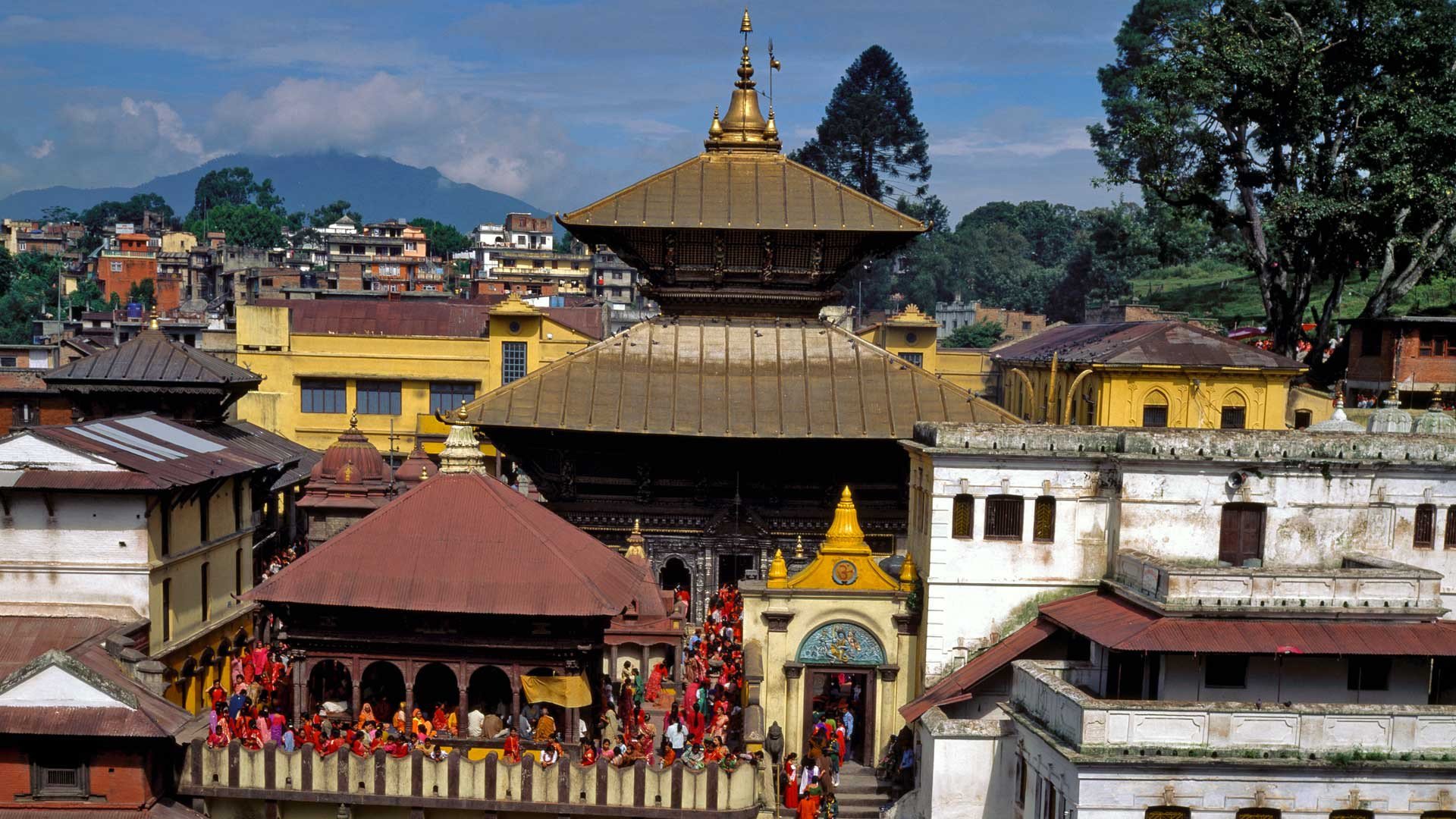
The private sightseeing tour today will take you to the most important Hindu shrine in Nepal: Pashupatinath. Here you will get an interesting insight into the temple site dedicated to the god Shiva. This Hindu pilgrimage center is also a cremation site used for Hindu funeral ceremonies.
We will then continue with the Boudhanath Great Stupa, the largest Buddhist temple outside Tibet. It is a white, simple, massive construction, much bigger in reality than the image that the photos show – it is 40 meters high and 100 meters in diameter.
Practically, it rises above all the surrounding buildings, and the Buddha’s eyes, painted above the dome, seem to be watching over the peace of the city and its inhabitants.
Enjoy this unique atmosphere with a cup of coffee or tea from one of the many roof terraces, from where you have a great view of the stupa.\
We will now advance to Durbar Square of medieval Bhaktapur town placed about 10 km to the east of Kathmandu City. Known as the former ancient royal city, it has been the living evidence of various historical stories.
The main attractions here are the Golden Gate, Palace of the Fifty-Five Windows, Nyatapola Temple, and Taleju Temple, along with several pagodas built in the Newari architectural style.
After the memorable visit, we will get along with our journey to the most gorgeous hilly town on the outskirts of the Valley- the Nagarkot. It provides uninterrupted views of Kathmandu, Bhaktapur, Changu Narayan, and the surrounding areas.
End your fabulous day with a toast to the fantastic sightings with sunset wine.
Highest Altitude
2175m.Meals
BreakfastAccommodation
3-star HotelDay 03: Sunrise from Nagarkot Viewpoint, and drive back to Kathmandu
With the first light peeking through our hotel window, we will head for a short climb towards the Viewpoint of Nagarkot. The unexplainable beauty of the snow-draped Himalayas of Manaslu, Langtang, Gaurishankar, and Everest eagerly awaits to bless us with their amazing sightings.
After soaking in the Views and eating breakfast, we will head back to Kathmandu. But wait, there is still much to show you in Kathmandu, so we will go to see the royal city of Patan (Lalitpur). Impressive temples, palaces, and statues characterize Durbar Square, which has preserved its art to date.
Then, we will advance to the holiest Swayambhunath Stupa decorated with the eyes of Buddha, surrounded by many other small chaityas and temples worshiped by both Hindus and Buddhists. It is the oldest and perhaps the most mysterious of all the holy shrines in Kathmandu.
Then the evening visit to Durbar Square of Kathmandu will take place. It is home to the old royal palace of the Malla dynasty, several shrines, and temples, including the temple of the living goddess Kumari. A short walk along the busy street takes you to the old part of Kathmandu, where there is a large market for souvenirs, spices, and vegetables.
Meals
BreakfastAccommodation
3-star HotelDay 04: Fly to Lhasa, pick up and hotel drive
A beautiful magnetic trans-Himalayan flight awaits us on the fourth morning of the Nepal Tibet Bhutan tour as we whisk above Kanchenjunga and Everest towards the heart and soul of Tibet- Lhasa city.
At the Gonggar International Airport of Lhasa, our efficient team will be awaiting our arrival. After the immigration formalities, our team will take us on a beautiful ride along the 90 km Highway beside the calm waters of the Brahmaputra River lovingly called as Yarlung Tsangpo River by Tibetans.
As the city approaches, the towering Potala Palace will shadow us along the travel while the amazing Monasteries and Buddha statues can be seen along the delightful street.
Eventually, we will be resting in the comfortable setting of the hotel in Lhasa. We advise you to rest for the remaining time because of the 3500 m above elevation. Please take it easy and acclimatize properly so you can enjoy the next day’s adventure fully.
Activity & Duration
1 hour 20 minsHighest Altitude
3680m.Meals
BreakfastAccommodation
3-star HotelDay 05: Whole Day Sightseeing Tour in Lhasa
After breakfast, we will set off with our private guide to explore the breathtakingly gorgeous Jokhang Temple resting in the center of old Lhasa. Regarded as one of the ancient and most pious temples, craftsmen from China, Nepal, and Tibet gathered in the 7th century by the order of Songtsen Gampo to construct this temple.
The temple has therefore embodied an intriguing combination of architectural styles from different countries. The temple has four floors and is built facing West to Nepal. Like Potala, it also has red and white walls.
At the top, there is a large golden Dharma wheel and bell-shaped decorations. However, the holiest Shakyamuni statue is the main feature of this temple along with a naturally born pagoda.
The octagonal Bakhor street surrounds the temple which was originally a pilgrimage route to Jokhang Temple. Along with the numerous devout pilgrims, we will also walk clockwise and turn prayer wheels, and experience the deep spirituality up close.
There are also colorful local markets now on the street which mostly sell unique Tibetan artifacts.
Now, we will move on with our private trip with the excursion to the impressive Potala Palace. It is a sacred monument of Tibetan Buddhism towering to 3700 m and had been the residence of successive Dalai Lamas and the palace where their tombstones rest.
The palace is divided into the White Palace where political affairs are carried out and the Red Palace where religious affairs are carried out. The Red Palace is mainly open to the public and has a luxurious and flashy interior with Buddha statues, and luxurious furnishings adorned with gold and jewels.
It also has and vividly colored murals, which show that it is the most important facility in Tibetan Buddhism. It can be said to be a World Heritage Site that Tibet is proud of.
Now, let’s wrap up our Lhasa tour for today and head back to our hotel room.
Meals
BreakfastAccommodation
3-star HotelDay 06: Second Sightseeing in Lhasa
This morning, we will drive 3 km west of the center of Lhasa to take a tour of the Dalai Lama’s former summer residence Norbulingka. It once played a role in Tibet’s political and economic life and is today added to the World Heritage List along with the Potala Palace.
Within the vast grounds, there are many Western-style mansions, parks, zoos, and other buildings, and it has a relaxing atmosphere that is different from the Potala and Jokhang. Inside the garden, the furnishings used by the 14th Dalai Lama before his exile remain intact.
Next, we will head to Drepung Monastery built at the foot of a rocky mountain about 10 km northwest of Lhasa. It is a temple of the Gelugpa sect, the largest sect in Tibet, and was founded in 1416 by Jamyang Juche, a disciple of Tsongkhapa, the founder of the Gelugpa sect.
When you enter Drepung Monastery, you are greeted by various prayer wheels. We can visit the Ganden Phodrang – the Dalai Lama’s residence until the Potala Palace was built. We can also see the gorgeous throne of Tsongkhapa.
Another interesting visit to the Sera Gompa awaits us. Sera Monastery is located at the foot of Mount Sera Utse in the northern outskirts of Lhasa. Founded in 1419 by Jamyang Choje Sakyayeshe, the monastery houses a large number of rare items and crafts, including Buddhist scriptures, Buddhist statues, ritual implements, and monk’s robes.
Among them is a silk painting of Sakyayeshe, measuring 109 cm in length and 64 cm in width, whose colors remain vibrant even after 500 years. There are also over 10,000 locally produced gold and bronze Buddha statues and bronze statues brought from India.
Ending the Lhasa tour with the evening walk in the local market, we will head to our cozy room.
Meals
BreakfastAccommodation
3-star HotelDay 07: Return flight to Kathmandu
It’s time to end the first section of our Nepal Tibet Bhutan tour and return to Kathmandu. Our Tibetan guide will ride you to the Lhasa Airport from where you will fly over the magical ice giants once more.
After you are transferred to your hotel, you can use the time to relax or take another tour of Kathmandu. Garden of Dreams – a neoclassical oasis in the heart of the city can be a delightful option.
Later in the evening, you can try Wo/Bara- a pancake made from the paste of back lentils and some Kukhurako Masu (Chicken curry).
Meals
BreakfastAccommodation
3-star HotelDay 08: Fly to Paro from TIA
It’s time to set off for the second part of our Nepal Tibet Bhutan tour, the onward journey to Bhutan. Early in the morning, our Nepali guide will pick you up to ride you to TIA. Say goodbye to your Nepali guide and fly over Annapurna, Kanchenjunga, Everest, Jumolhari, and Jichu Drake to Paro.
The first gift of Bhutan to you will be the pure cool mountain air. At the Paro Airport, our new Bhutanese guide will be awaiting our arrival who will then ride us to the charming hotel in Paro.
Once we settle in our accommodation, we will get ready to head to Paro Dzong which stands overlooking the Paro cityscape below and is also famous for being the location for the movie Little Buddha.
The corridor at the entrance to the dzong is decorated with vivid murals of the Four Heavenly Kings, the Six Realms of Reincarnation, and Kanlop Chusum. When we step inside, we will see Utse towering over the wide stone pavement.
We will now climb to Ta Dzong, a watchtower that protects Paro Dzong directly below. It has a very interesting structure, and we enter from the top of the circular building and go down while looking at the exhibits.
It is the only national museum in Bhutan, and it has an extremely rich collection of exhibits, from Buddhist statues, mandalas, thangkas, agricultural tools, flora and fauna, metalwork, and stamps.
Kyichu Lhakhang will be next on our list said to be built at the site of a female demon’s left foot who tried to demolish Buddhism in Bhutan. The temple has many Buddha statues inside. A must-see is the floor in front of the main image of the old hall.
Here, we can see the wooden floor with worn-down indentations of feet made by worshipers repeatedly prostrating themselves here for many years.
Now, enjoying the main street of Paro lined with restaurants, and souvenir shops, we will get back to our hotel.
Activity & Duration
1 hr 10 minsHighest Altitude
2200m.Meals
Breakfast, Lunch, and DinnerAccommodation
3-star HotelDay 09: Morning tour of Taktsang (Tiger’s Nest) Monastery and drive to Thimphu
The morning awaits our tour in the Taktsang Monastery built on a steep rocky mountain. This monastery literally means tiger’s nest which clings to the cliff.
The provider and founder of Buddhism in Bhutan- Master Rinpoche (Padmasambhava)- transformed into his anger form and ride on a tiger, landed in this place thus justifying its name.
We will first drive up to the parking lot to the monastery, then we will have to climb the mountain path. After just under two hours from the start, we will arrive at the cafeteria overlooking Taktsang Monastery.
From there, it will take another hour and a half to reach the monastery. There are many steep climbs and long stairs to climb, so please do not push yourself and walk at your own pace.
After taking a look at the inside of the monastery, its prayer wheels, and architectural miracles, we will now get ready to head to Thimphu. Driving across the beautiful mountain street, we will pass by the attractive Simtokha Dzong of 1629 housing the School of Buddhist Studies.
Once we are at Thimphu, our guide will transfer us to our accommodation where we will enjoy some well-deserved rest.
Activity & Duration
2 to 3 hrs / 1 hrHighest Altitude
3120m.Meals
Breakfast, Lunch, and DinnerAccommodation
3-star HotelDay 10: Sightseeing in Thimphu
First, we will get to know the traditional cuisine of Bhutan during our breakfast. Then, we will head to begin our exploration program of the unique city.
We will visit the National Memorial Chorten, a stupa that is a popular gathering place for locals. People of all ages come here to pray or spend time together. The stupa was built in 1974 by the mother of the third king in memory of her son, His Majesty Jigme Dorji Wangchuk.
Then head to the impressive National Library, where we can marvel at an extensive collection of ancient Buddhist texts and manuscripts. We will continue to the Zorig Chusum Institute, a renowned arts and crafts school, where we will get an insight into the traditional arts being learned by the students.
Then, visit the Folklore Museum for a vivid insight into rural life in Bhutan. After lunch, we will head to the Takin Sanctuary in the afternoon to see the unique hybrid of a cow and a goat, the Takin.
We will advance to the picturesque Pangri Zampa, one of the oldest monasteries in Bhutan, built in the 16th century. Our journey will then take us to the imposing Tashicho Dzong, a majestic monastery fortress and seat of government.
At the end of the day, we will visit the lively Centenary Farmers Market and the impressive Buddha Point Kuenselphodrang, where we can admire the largest Buddha statue in the country.
We will now round off the day with dinner together in our accommodation.
Meals
Breakfast, Lunch, and DinnerAccommodation
3-star HotelDay 11: Morning tour of Wangditse Lhakhang, drive back to Paro
We will begin our day with a lovely walk to Druk Wangditse Lhakhang. The fourth birthday of the Royal Prince of Bhutan was celebrated here after which it gained popularity among foreign travelers.
The easiest track to reach here would be through the BBS Tower or Sangaygang. There was a time when this building belonging to 1715 AD used to serve the 8th Druk Desi as his formal seat.
Today, it has been turned into one the very few gorgeous Viewpoints in Bhutan that offer the breathtakingly bewildering views of the entire Thimphu and its landmarks.
It’s time that we say farewell to this marvelous wonder and drive once again to picturesque Paro.
Activity & Duration
2 hoursMeals
Breakfast, Lunch, and DinnerAccommodation
3-star HotelDay 12: Flight back to Kathmandu from Paro
Today it’s time to say goodbye to the treasures of Bhutan and journey back to Kathmandu in the morning. Our Bhutanese guide will come with us to see us off at the Paro Airport from where we will once again which in the sky towards Kathmandu.
After landing in Kathmandu, you will be taken to your accommodation where you will be checking in for the last night.
Meals
BreakfastAccommodation
3-star HotelDay 13: Farewell Nepal
After a final breakfast in Kathmandu, your airport transfer is ready to take you to Kathmandu airport. While you say goodbye to the fascinating impressions of the Nepal Tibet Bhutan tour, you can carry the memories of your adventures in the heart of the Himalayas with you.
Meals
BreakfastIncludes and Excludes
What is included?
- All ground transportation by private vehicle including airport transfers
- Four nights’ accommodation with breakfast at a 3-star category hotel in Kathmandu
- A night accommodation with breakfast at a 3 star category hotel in Nagarkot
- All guided sightseeing tours in Kathmandu, Tibet and Bhutan including entry fees, tour guide and private transport
- Tibet Travel Permits and Visa fees
- Flight from Kathmandu to Lhasa economic class
- All accommodation in Tibet with breakfast, 3 star category hotel in Lhasa/Shigatse and best available Guesthouses other places
- Return flight from Paro to Kathmandu economic class
- Four nights 5 days Bhutan cultural tours including: Full board meals (Breakfast, Lunch and dinner) Government approved hotels, all sightseeing tours, entrance fees, tour guides etc.
- Bhutan Visa fees
- All government taxes and service charges
What is excluded?
- Meals not specified in the ‘Meal Inclusions’ in the itinerary
- International flights other than specified in the cost inclusion sections
- Nepal entry and re-entry visa fee
- Indian visa fee
- Personal shopping, internet/Phone bill, and laundry
- Pony service and porters
- Tips for tour guide and driver
Trip Information
Climate and best Time for Nepal Tibet Bhutan tour
It’s quite remarkable that the three mysterious kingdoms of Nepal, Tibet, and Bhutan have weather that is somewhat alike. The central areas of Kathmandu, Paro, and Thimphu in Nepal and Bhutan have subtropical climates significantly shaped by monsoon rains.
On the other hand, Lhasa in Tibet has a climate similar to that of Mustang and Manang in Nepal, which is dry, arid, and well-protected from monsoon downpours.
However, all three nations experience dry weather during the autumn season from mid-September to early October and in spring from March to June making it an ideal time for sightseeing tours like our Nepal Tibet Bhutan Tour.
In autumn, the leaves of the lush forests in Nepal and Bhutan turn the most beautiful shades of yellow and orange that carpet the forest floors gloriously. The skies are fully open with sporadic clouds. While the hot dry days in Lhasa suddenly cool down to milder heats between 15 to 20 degrees Celsius.
In spring, the new blooms of firs, and rhododendrons reveal the enchanting landscapes of Nepal and Bhutan. While in Lhasa, the milder 25 degrees Celsius and open blue skies unveil the full beauty of this charming land.
The summer from June to late August is the most beautiful time for a Lhasa visit with sporadic rainfalls. However, in Kathmandu, Paro, and Thimphu, the rain can reach up to 50 to 70 cm thoroughly soaking the cities with hovering dark clouds in the sky.
The winter from mid-December to late February in Kathmandu, Paro, Thimphu, and Lhasa offers the best shiny days with cold nights and mornings. Being the least tourist period, you will have the advantage of fewer tourists and more discounts available.
Nepal Tibet Bhutan Tour Difficulty
Our Nepal Tibet Bhutan tour is an orientation journey into the magical lands of the three astounding nations. In Nepal, your tour will be solely focused on Kathmandu Valley and Nagarkot at relatively lower elevations.
When you move into Lhasa, a sudden altitude shift will be experienced when your days are spent above 3500 m height. To address the issue of changing altitude, we have a rest day and two days of sightseeing tours in a comfortable private vehicle, with only brief walks around the monasteries.
In Bhutan, the altitude is generally lower like in Nepal, with the exception of the hike to Tiger’s Nest Monastery, which is slightly challenging yet manageable.
Throughout your journey, a comfortable private vehicle with a professional driver will facilitate your travel across all cities, while you will enjoy restful nights in high-quality tourist hotels.
Therefore, our Nepal Tibet Bhutan tour is the simplest way to explore these intriguing cities all in one single journey.
Who can participate in this journey?
The three countries are known to the world not only for their stunning landscapes, majestic mountains, and rich mysticism but also for being among the safest destinations in the world with the lowest crime rates.
Each of these nations displays a harmonious blend of nature, spirituality, modernity, and tradition. From the modern bars, and lounges to religious and centuries-old palaces, temples, and Gompas, from the English-speaking educated helpful, and friendly people to nomadic herders, you will get everything in this single trip.
Therefore, whether you are a solo female traveler, a retiree, a newlywed couple, or a family with children, we invite you all to take part in our Nepal Tibet Bhutan Tour trip without any hesitation.
Altitude Sickness and Acclimatization
Kathmandu, Paro, and Thimphu are located at elevations below 3,000 meters, where the air contains a high concentration of oxygen. In Paro, we will temporarily reach an altitude above 3,100 meters during our exploration of the Tiger’s Nest Monastery.
On the other hand, Lhasa is situated at an elevation greater than 3,500 meters, where the oxygen levels are lower compared to those in Kathmandu and Bhutan. This difference in altitude may lead to altitude sickness, the conditions will be mild, with a very low chance of severe complications.
In our years of experience, we have noticed that very few participants experience headaches, body aches, restlessness, or sleep disturbances. Breathing difficulties are also reported but only by a few participants.
Therefore, our guide advises all participants to prioritize rest on their arrival day in a new city. The walking and sightseeing tours will commence the next day, which will help facilitate your acclimatization to the new air and altitude.
To ease the acclimatization process and prevent altitude sickness, you can take Diamox when in Kathmandu. Give your body plenty of fluid especially water and carry water bottles so you can drink in between the excursion.
Accommodation, Food, and Drinks
We have tried to manage every detail and expense associated with our Nepal Tibet Bhutan Tour. Almost all costs related to your accommodation, meals, transportation, and permits are included in our itinerary cost.
In Kathmandu, Lhasa, and Bhutan, you will enjoy stays in comfortable three-star hotels equipped with private bathrooms, hot showers, and internet access. During the booking process, we have also ensured that these hotels provide stunning views of the cities right from your room windows.
In Kathmandu and Lhasa, a bed and breakfast service will be available in the mornings, while lunches and dinners will be left to your own choice. This will let you experience the remarkable cuisine of these cities according to your taste. In Bhutan, full board meals will be provided three times each day.
The cuisines in all three nations are both international and local flavors. Dishes are available to suit all preferences, whether you prefer spicy or mild, vegetarian or non-vegetarian.
Transportation
All transportation during our Nepal Tibet Bhutan Tour will be conducted in private vehicles, which may include a minibus, van, car, or bus, depending on the size of the group.
The service also covers airport transfers in the cities on your arrival and departure days in Kathmandu. Additionally, your flights to Lhasa and Paro will be arranged in economy class.
Currency, Money exchange, and Credit Cards
Nepal uses the Nepalese Rupee (NPR) as its official currency, while Lhasa uses the Chinese Renminbi Yuan (RMB), and Bhutan operates with the Ngultrum, although Indian Rupees (INR) are also accepted.
Currency exchange services are available in all three countries at various private and government bank counters. You can also change your home currencies at the airport on our arrival.
If you do so in Paro, remember to retain the money exchange invoice so the excess local money can be returned on your departure. Since your first visit and stop in between the Nepal Tibet Bhutan Tour will occur in Kathmandu, it will be easy and wise to exchange all the needed money here through banks such as Himalayan Bank, State Bank of India (SBI), and Standard Chartered.
Calculate the budget for your personal expenses, beverages, lunches, and dinners in Kathmandu and Lhasa. The average needed cost per day for each person will be around $25 to $30.
Regarding credit cards, Visa and MasterCard are accepted at major retail stores, hotels, and restaurants. In Kathmandu and Lhasa, certain e-wallets and mobile applications are also available for payment. In Kathmandu, options such as eSewa, Khalti, and Fonepay can be utilized, while in Lhasa, WeChat Pay, Apple Pay, and Alipay are accepted.
Communication and Internet
It is always wise to go for an economical communication option when traveling abroad. Instead of relying on roaming services, you can consider using the local operators of the respective countries.
In Kathmandu, use the NTC or NCELL SIM cards, in Lhasa, go for the China Unicom, China Mobile, or China Telecom cards and in Paro and Thimphu, you can use the Bhutan Telecom SIM cards. Both Nepal and Bhutan offer 4G services, while Lhasa provides access to 5G.
Don’t worry as our respective guide in each country will help you acquire the local SIM cards.
In Kathmandu, Bhutan, and Lhasa, WiFi connectivity is not an issue, and several facilities may offer free WiFi access. In Lhasa though, a VPN app is required to access YouTube, Twitter, Gmail, Instagram, Google, WhatsApp, and Facebook.
And, in Paro and Thimphu, it will be more practical to purchase 10 GB of mobile data for 94 Bhutanese Ngultrum.
Rules and Regulations for Nepal Tibet Bhutan Tour
Engaging in the Nepal Tibet Bhutan tour involves following particular guidelines and regulations, along with obtaining necessary special permits.
The essential rule to follow is to arrange your tour through a licensed travel and tour agency for access to Bhutan and Tibet. Foreigners cannot travel alone in Tibet and Bhutan, no matter what information is available online.
In both Lhasa and Bhutan, you must travel in the company of a registered professional driver and guide, with all transportation to be conducted in a private vehicle. By booking your tour with a reputable travel agency (such as ours), you will receive a package that includes transportation, accommodation with breakfast, a guide, entrance fees to attractions, and all required permits.
Another critical thing to consider is the timeline. The permits and visas necessary for Lhasa and Bhutan require at least 15 business days for processing.
So, you must reserve your Nepal Tibet Bhutan tour one to two months ahead of time. After you finalize your travel program and confirm the tour, you will not be able to make any changes or customizations. Since all the information will already be sent for registration in the respective permits.
Additionally, please remember that as part of a group, all members must arrive in and depart from the country at the same time.
And, you must posses a passport with the effectiveness of at least six months and should have a minimum of two blank pages. Additionally, for the Tibet permit and Visa, we request from you passport-sized photographs that are 51 mm by 51 mm, taken without makeup or glasses, and set against a white background.
Permits and Visa for Nepal Tibet Bhutan Tour
Gaining entry in Nepal is simpler compared to Tibet and Bhutan. Let’s look at the Visas and permits we will be needing for our Nepal Tibet Bhutan Tour.
- Tourist Visa for Nepal
To land in Kathmandu, you only need to have a tourist Visa which conveniently can be obtained as you arrive at TIA. Simply, complete the online application form on the Nepal Immigration Office website, print it out, and bring it with you to Tribhuvan International Airport (TIA).
Now, choose the days of your stay and pay the fee ( 15 days: $30, 30 days: $50, and 90 days: $125) and get the Visa.
- Permits for Lhasa
To enter Lhasa, we need two sets of essential documents: the Chinese Group Visa and the Tibet Travel Visa or Permit.
- TTP (Tibet Travel Permit)
To explore Lhasa without restrictions, the first requirement is the Tibet Travel Permit, which must be obtained through an authorized tour operator in Tibet.
Here, we want to inform you that we work with our licensed travel partner in Tibet who will submit the necessary application to the Tibet Tourism Bureau in Lhasa with your photos and scanned or photocopied passports.
Once the application is processed, an invitation letter will be issued to us, and our respective Tibetan guide will collect the permit and present it at Lhasa Airport on your arrival.
- Chinese Group Visa
For this Visa, all group members of the Nepal Tibet Bhutan tour must visit the Chinese embassy in Kathmandu in person at the same time.
Each participants are required to submit their photographs, original passports, and fingerprints. The passports will be kept for three days while the visa is being prepared. A single white document, issued in Chinese, will be provided as the Visa for the entire group (justifying the name of course).
- Bhutan Tourist Visa
Bhutan has a selective approach when it comes to providing entry to foreign travelers. Citizens from India, Bangladesh, and the Maldives enjoy unrestricted access, while individuals from other nations have some restrictions as explained above.
It is also interesting that the visa application for Bhutan is not handled at the Embassy but through an authorized tour operator or their representative overseas.
We work with a licensed travel partner in Bhutan who will present your documents to the Bhutan Tourism Department. After your application is approved, the visa will be granted on your arrival at the airport by immigration officials, requiring a payment of 20 US dollars.
Protocols to Follow when traveling in Nepal, Tibet and Bhutan
Public smoking is restricted in Kathmandu, Bhutan, and Lhasa. There are specific locations, particularly in Lhasa, Paro, and Thimphu, where smoking is allowed.
Likewise, travelers can bring up to 200 cigarettes per person through the airport, which may incur expensive taxes and customs duties. If you happen to bring more than 200 cigarettes, additional custom fine will have to be paid.
Bhutan has stricter rules, and failing to provide a customs receipt could result in your imprisonment. Regarding alcohol, you may bring up to one liter of alcoholic beverages, and drinking is allowed in restaurants, bars, and hotels, but of course, you should avoid drinking and driving.
In Kathmandu, police officers are generally friendly towards tourists, and many do not object to having their photos taken. However, the situation is different in Bhutan and Lhasa, where photographing military and security personnel is generally prohibited. If you do, jail or some conflicts may arise.
Therefore, please seek permission before taking photographs, particularly in monasteries. It is also important to remember that when visiting the monasteries in Bhutan and Lhasa, your attire should be appropriate. The long-sleeved tops and long trousers are appropriate for both men and women.
And, please do not take any items related to the exiled Dalai Lama while in Lhasa, and do not publicly mention his name, especially when military personnel are present.
Frequently Asked Questions
Why have you planned to travel to Tibet first then Bhutan?
Because it will allow us to save much time as Bhutan Visa takes longer time for processing. By the time we finish the Tibet tour and return to Kathmandu our Bhutanese Visa will be prepared.
Is the Sustainable Development Fee (SDF) included in your Nepal Tibet Bhutan Tour? And, how much does this fee cost?
Yes, the SDF fee of USD 100 for each day for each person is included in our itinerary cost. After the pandemic of COVID, the fee was $250 but now it has been reduced and it will remain so till 2028.
What items should I put in my backpack to ensure they are suitable for all three countries?
Make sure your clothing is appropriate for all types of weather conditions. Include warm clothing, raincoats, summer outfits, sandals, flip-flops, and walking shoes. Additionally, do not forget to keep the personal sanitary items along with sunscreen, glasses, and hats for sun protection.
Will there be a language barrier in Nepal, Tibet and Bhutan?
Almost everyone in Kathmandu can speak, write, and understand English. However, in Bhutan and Lhasa, very few people can understand English. Fortunately, our respective local guides are English-speaking professionals who will help you communicate.
Can my children accompany me on your Nepal Tibet Bhutan tour?
Children are welcome on this tour; however, we advise not to bring preschool children to Lhasa due to its high altitude and the difficult climate conditions.
Which type of travel insurance is suitable for your Nepal Tibet Bhutan tour?
Since our Nepal Tibet Bhutan tour does not involve extreme sports or high-altitude mountain trekking, a basic travel insurance plan is appropriate. Be sure to include coverage for altitudes up to 3,700 meters in your policy, along with helicopter rescue and evacuation, theft, baggage loss, flight cancellations, trip cancellations, medical costs, and additional accommodation expenses.
Is any special physical preparation necessary for this trip?
This trip is one of the easiest journeys as it does not involve lengthy hiking or climbing segments. The only short walks, which take about 2 to 4 hours, take place when exploring the cities. The hike to Tiger’s Nest Monastery in Bhutan can be problematic for those who are not used to waking up in their daily life.
If you are used to walking, you will not need any special preparation. However, if walking is not part of your daily life, it would be wise to begin walking one or two months before your journey.

Trip Reviews on Nepal Tibet Bhutan Tour


US$ for min 3 person
- 1 over 9999 US$ 3500
- Guaranteed Best Prices
- Safe Online Bookings
- Adjustable Booking Dates
- Owner operated company
- Many Years of Experience
US$ 3500
Talk to travel expert  +9779851352528
 +9779851352528


