

Everest Base Camp Short Trek-14 Days


14 Days
Trip Duration
Difficulty
Moderate
Activities
Trekking
Group Size
2-16 People
Max. Altitude
5545m./18192ft.
Destination
Nepal
Best season
March- May and September-December
Meals
- 14 Breakfast
- 12 Lunch
- 11 Dinner

Accommodation
- 3 star hotel in Kathmandu
- Guest house during the trek

Transportation
- Flight
- Private Vehicle

Highlights of Everest Base Camp Short Trek-14 Days
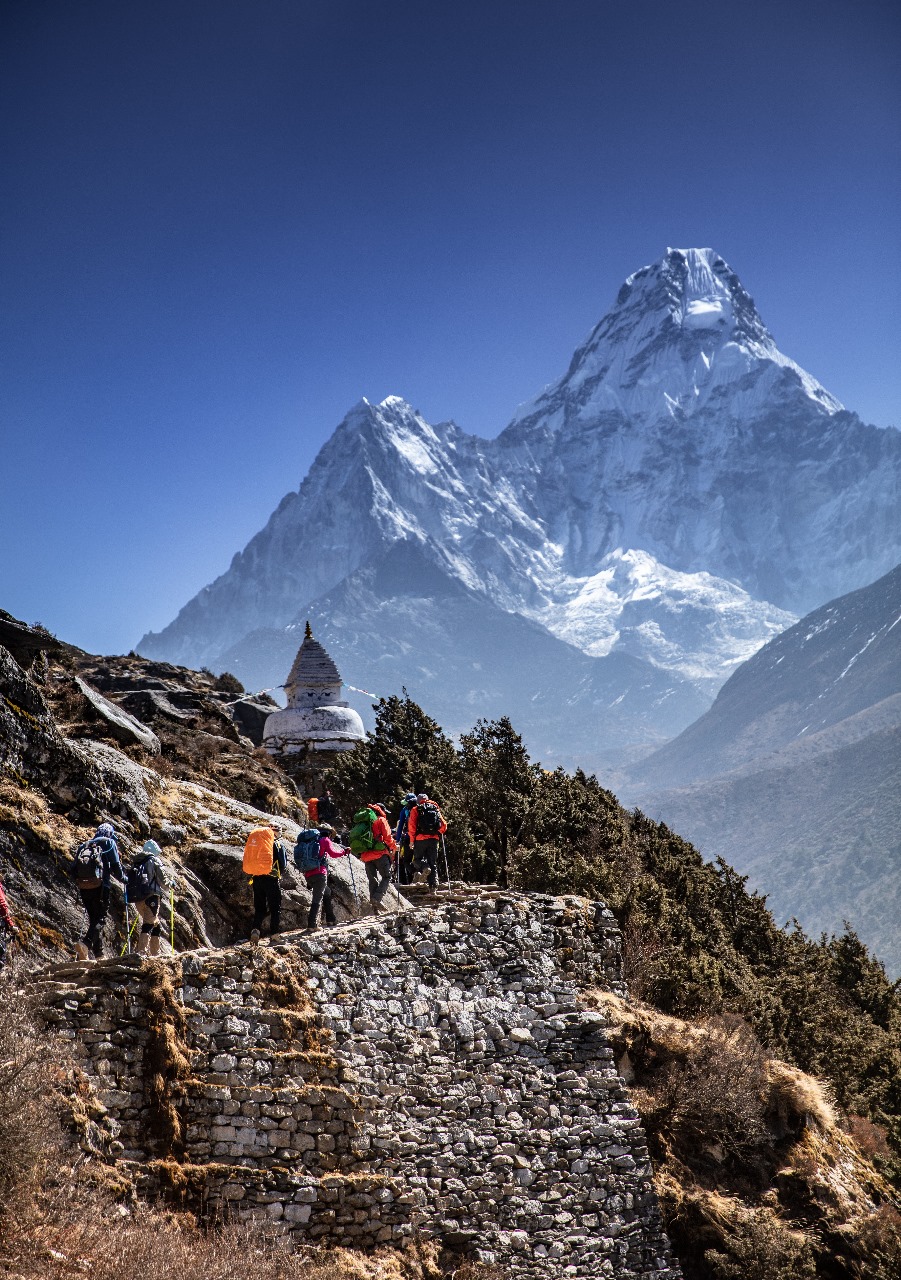
- Witness breathtaking panoramic views of the world’s highest peaks, including Mount Everest, Lhotse, Nuptse, and Ama Dablam.
- Experience the most thrilling flight to Lukla
- Trek through diverse landscapes, including lush forests, alpine meadows, glacial moraines, and rugged mountain terrain, offering a feast for the eyes at every turn.
- Experience the rich Sherpa culture and hospitality by visiting traditional villages, and monasteries, and interacting with local Sherpa communities by spending nights on lodges along the trek.
- Visit to the sacred Tengboche monastery and museums that sheds history of Khumbu region
- Eccentric and charming towns of Khumbu valley that shows vibrancy of the region

Need help? Talk to travel expert
Trip Overview of Everest Base Camp Short Trek-14 Days
Join in for an adventure that takes you close to the tallest mountain in the world. Everest Base Camp Trek is one of the best treks in the world for both pro and new trekkers. That being said, this journey is not only about hiking to the base camp of Mt. Everest but it is also about exploring the beauty of the Himalayas and the cultures that exist there.
Located in the north of Nepal, Everest Base Camp Trek lies in the Khumbu region. It is famous for housing iconic peaks such as Lhotse, Nuptse, Cho Oyu, Ama Dablam, and so on along with Everest. Besides the mountain, the region is home to the brave Sherpa ethnic clan who has summited Everest more than anyone in the world. Thus, this journey brings in the highlights of scenic mountain beauty along with unique Sherpa culture.
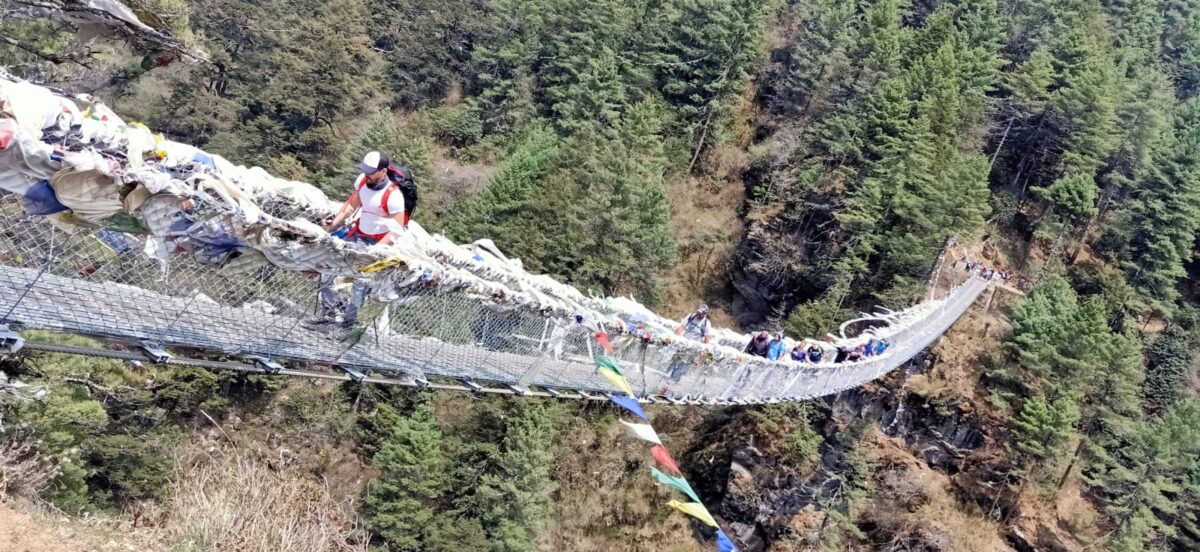
This enthralling trek begins with an exciting and scenic flight journey you will ever take. The 20-minute flight will give you a glimpse of Nepal’s hilly landscape and breathtaking panoramic views of Everest Massif. The hike includes walking along diverse forest areas and charming rural villages. Alongside, you will be crossing many rivers and suspension bridges adorned with prayer flags dancing in the air.
Towns of the Everest region are another attraction of this journey. The journey includes walking past charming towns like Lukla, Phakding, Namche, Tengboche, Dingboche, and many more. As you progress on the hike, towns thin out due to elevation rise but incredible scenery shall remain your companion till the end of your trip.
People of this region mostly follow Buddhism thus the trail is filled with small chortens, gumbas, and mani walls signifying the religious background of the place. Likewise, there are several beautiful monasteries on the trail known for hosting large cultural festivities. If lucky, you might get to partake in one of the many festivals that Sherpa considers sacred to them.
Everything considered, this is a beautiful journey mixed with adventure. Fit for people of all ages, this incredible journey however will test your limits. Hence, prior physical preparation is suggested for a smooth journey. All in all, Everest Base Camp Trek is the perfect gateway to experience a variety of natural brilliance at once. And we as experts can vouch that!
We at Hike Holiday Trek are at your service to curate fitting journeys at your convenience and offer a wide range of activities for travellers to choose from. Join us and make lasting memories for a lifetime!
When Is the Best Time For Everest Base Camp Short Trek?
You must know that the EBC trail is open throughout the year. So you can do Everest Base Camp Short Trek any time of the year.
The weather conditions are ideal for trekking during spring and autumn because of the clear sky, relatively less rainfall, and moderate temperatures. Early winter is also a good time, but the freezing temperature at dusk and down makes the trek less enjoyable.
Monsoon months during summer are the least favourable time to trek to the Everest region. However, the best thing about doing Short Everest Base Camp Trek during winter and summer is that you can take the Lukla flight from Kathmandu instead of Ramechhap. Also, the trail to Everest Base Camp will be less crowded during these seasons.
Can Beginners Take the Short Trek to Everest Base Camp?
The Everest Base Camp trail is well maintained and thus in good condition. More than the landscape, the thinning air on higher trek elevations makes it difficult for trekkers to walk toward the Base Camp of Mt. Everest. However, with proper preparations and guidance from our trained guides, you will complete your 14-day hiking adventure.
Building your stamina by moderately strenuous exercises a few months before your trek will prepare you for the mountain adventure. A balanced diet and endurance exercises like jogging, swimming, cycling, and long hikes will help you achieve the proper fitness required for the Short Everest Base Camp trek.
If you do long hikes before your Everest Base Camp trek, you will better understand the terrains and gain experience tackling difficulties in mountainous regions. But this is optional. If you are fit and have enough stamina, you will complete your hike to the Everest Base Camp without significant hardship.
Alternative Routes
Everest Base Camp Trek have a lot more alternative routes, according to your interests and duration you can choose among different way out. There are also numerous shorter and longer itineraries from different perspectives of exploring the Khumbu or Everest region in Nepal. No matter which of the routes you choose, we still provide with best trekking experience.
The trending and popular alternative routes are Ama Dablam Base Camp Trek, Rolwaling Valley Trek, Everest Gokyo Valley Trek, 9-Day Everest View Trek, Everest Panorama Trek, the Short Everest Trek, Three Passes Trek, and many more, which offer different awe-inspiring unique natural beauty in each route.
Trip Photo & Video Gallery

Detail Itinerary of Everest Base Camp Short Trek-14 Days
Day 01: Arrive At Tribhuwan International Airport, Kathmandu
Upon arrival at the airport, a representative from Hike Holiday Treks will pick you up and transfer you to the hotel. At the hotel, we will talk about your trip. You can relax for the remaining daytime.
Activity & Duration
30 minutes driveHighest Altitude
1300m. (Kathmandu)Meals
BreakfastAccommodation
3 star hotelDay 02: Fly To Lukla And Trek To Phakding (2,652m/8,699ft), Duration: 3 Hours
With a beautiful morning flight to Lukla, you will see fantastic sights of gradually changing landscapes. The trek begins with an easy walk, passing through the village of Chaurikharka and walking down towards Dudh Koshi Ghat, lying at an altitude of 2,530m. Trekking along the shore of Dudh Koshi River, we will reach Phakding.
Activity & Duration
30 minutes flight and 3 hour trekkingHighest Altitude
2652m. (Phakding)Meals
Breakfast, Lunch, and Dinner IncludedAccommodation
Overnight Stay at GuesthouseDay 3: Phakding To Namche Bazaar (3,440m/11,283ft), Duration: 6 Hours
We will head off from Phakding on this day and pass through splendid rhododendron forests, the wood blossoming rich with magnolia and aligned with fir trees. The area will be full of blooming rhododendron flowers during springtime. We will also pass through Jorsale (2,805m) and pass by the junction of Dudh Koshi and Bhote Koshi. We will climb for some time and get the first glimpse of Everest if the weather is clear and the clouds part way. Ascending further, we will reach Namche Bazaar, a flourishing Sherpa village and an administrative hub of the Khumbu region.
Activity & Duration
6 hours walkingHighest Altitude
3440m. (Namche)Meals
Breakfast, Lunch, and Dinner IncludedAccommodation
Overnight Stay at GuesthouseDay 4: Hike to Everest View Hotel at Namche
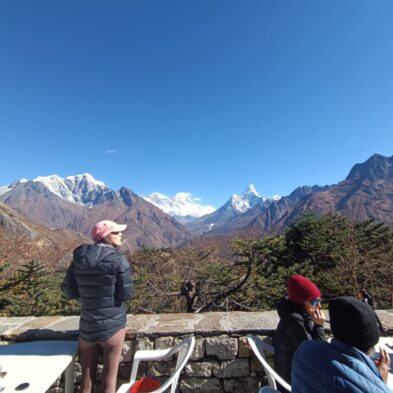
At Namche Bazaar, we will rest to acclimatize and avoid altitude sickness. It is also recommended to experience a short hike on this day to help adjust our bodies to the raised elevation. We will climb to Everest View Hotel, which presents magnificent views of Mount Everest, Mount Ama Dablam, and more surrounding peaks. We will then trek back to Namche.
Activity & Duration
3-4 hours walkingHighest Altitude
3880m. (Everest View Hotel, Namche)Meals
Breakfast, Lunch, and Dinner IncludedAccommodation
Overnight Stay at GuesthouseDay 5: Trek To Tengboche (3,860m/12,660ft), Duration: 5 Hours
We will move ahead from Namche Bazaar and continue walking all along the rushing glacial waters of the Dudh Koshi. On the way to Sanasa, we will pass by the ethereal rhododendron forests. You may also see faunas like the multi-colored pheasants, musk deer, and the Himalayan Thar. From Sanasa, we will walk vertically up to the famous Tengboche Monastery. It is the largest monastery in the Khumbu region, which presents magnificent peak views of Mt. Everest, Mt. Lhotse, Mt. Nuptse, Mt. Ama Dablam, and The Thamserku.
Activity & Duration
walking 5 hours walkingHighest Altitude
3860m. (Tengbouche)Meals
Breakfast, Lunch, and Dinner IncludedAccommodation
Overnight Stay at GuesthouseDay 6: Tengboche To Dingboche (4,410m/14,464ft), Duration: 5 Hours
We will trek for around 5 hours to get to Dingboche on this day. Our trek begins with an adjacent route with the rhododendron forest from Tengboche to Debuche. We will also traverse the raging Imja River and pass by Pangboche village, the region’s biggest village occupied by Sherpa people. Here, we can walk to Pangboche Monastery, one of the ancient monasteries. We will have quite a challenging walk in the afternoon as the scenery turns dry and deserted before reaching Dingboche.
Activity & Duration
6 hours walkingHighest Altitude
4410m. (Dingbouche)Meals
Breakfast, Lunch, and Dinner IncludedAccommodation
Overnight Stay at GuesthouseDay 7: Dingboche - Nagerjun Hill (5,083m/16,676ft) And Return To Dingboche, Duration: 6 Hours
We will have another acclimatization day in Dingboche on this day. We will also have a short hike to Nangkartsang Peak, often known as Nagerjun Hill. The hill is set just above Dingboche, generally climbed to get accustomed to the high altitude. We will have a pretty demanding day as the path is steeper. It takes around 5 hours to reach the top and get back to Dingboche, where the stunning views of Lobuche East (6,119m), Kangtega (6,685m), Taboche (6,367m), Lobuche West (6,145m), Thamserku (6,608m), and Ama Dablam (6,812m) will mesmerize us. Then, we will return to Dingboche.
Activity & Duration
walking 5-6 hoursHighest Altitude
5083m. (Nagerjun Hill )Meals
Breakfast, Lunch, and Dinner IncludedAccommodation
Overnight Stay at GuesthouseDay 8: Trek To Lobuche (4,910m/16,105ft), Duration: 5 Hours
We will climb steeply up to Lobuche, leaving behind Dingboche, passing a chorten. We will also pass by Dugla, located at the tip of the Khumbu Glacier. With a vertical and small climb up, we will stroll to Chukpo Lari and see memorials put up in tribute to those who lost their lives in the Khumbu region. Also, you cannot ignore the stunning vista of the enormous mountains. We will finally reach Lobuche (4,910m) with a hassle-free walk.
Activity & Duration
Walking and 6 hourHighest Altitude
4910m. (Lobuche)Meals
Breakfast, Lunch, and Dinner IncludedAccommodation
Overnight Stay at GuesthouseDay 9: Trek to Gorakshep (5,181m/16,994ft) - Hike to Everest Base Camp (5,364m/17,594ft), Duration: 8 Hours
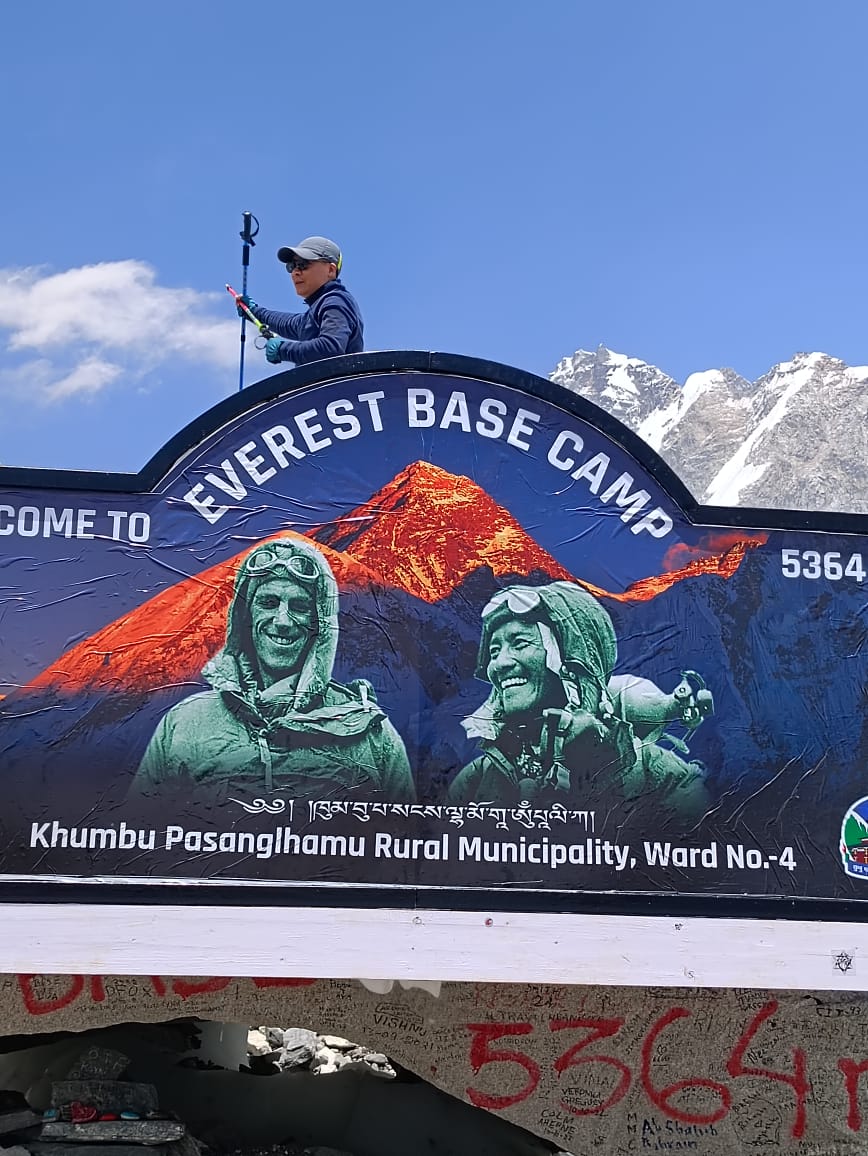
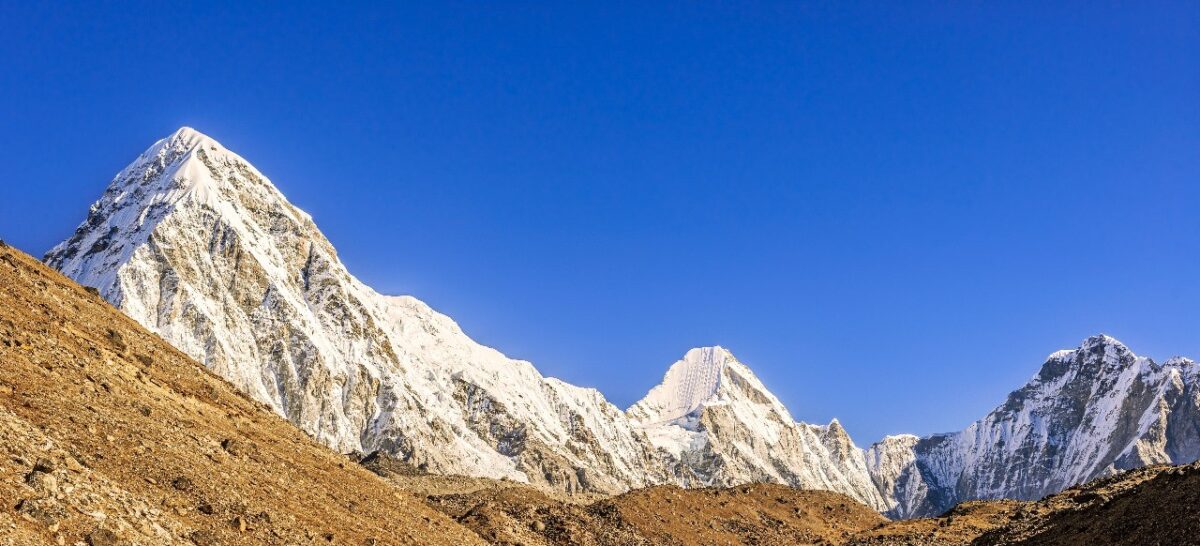
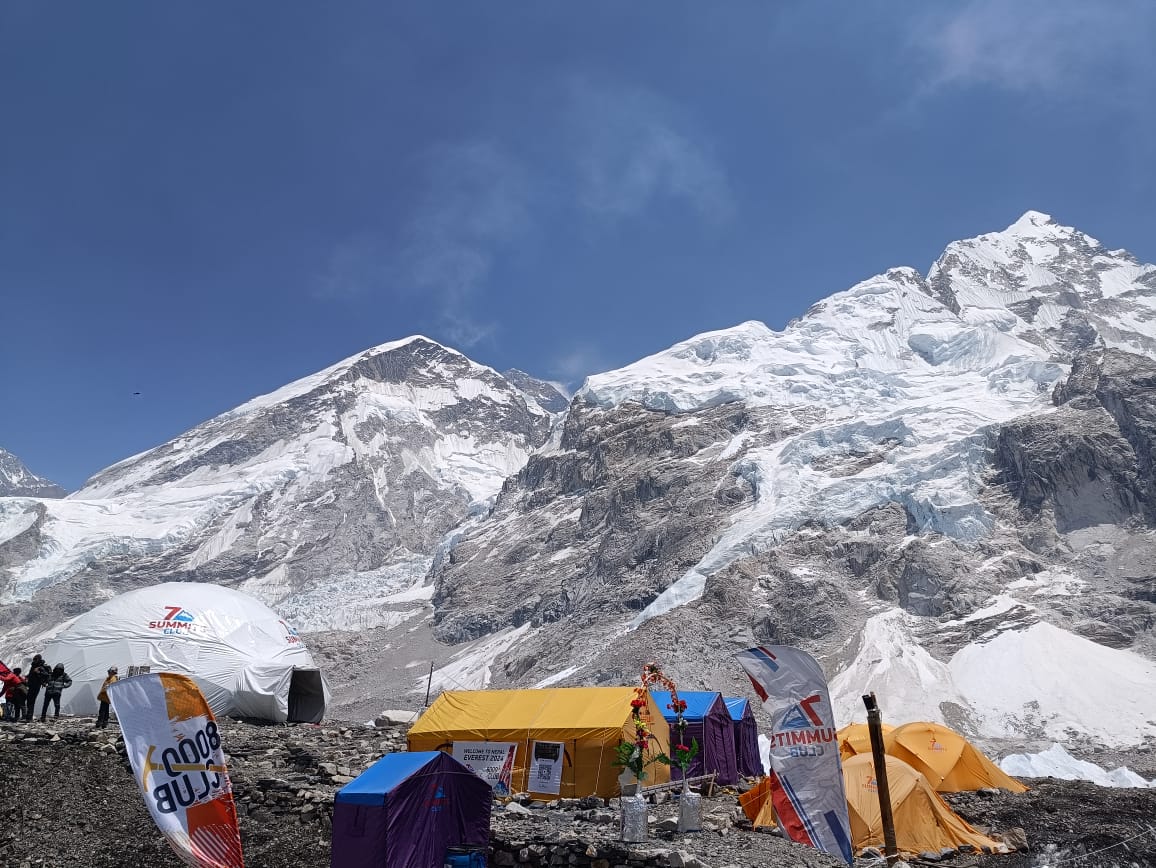
Departing from Lobuche, we will walk towards Gorakshep from Lobuche on this day. Today is an integral part of the trek as it incorporates making it to the Everest Base Camp. Upon reaching the foot of Mt. Everest, the views of Everest, Mahalangur, Khumbutse, Lingtren, Mt. Pumori, and Mt. Nuptse will enthrall us. We will also walk further up to the top, passing the gush of Changri Glacier to get the sight of Kala Patthar, which translates to “Black Rock.” Walking further ahead, we will reach the Everest Base Camp, where we shall have a fantastic time drowning ourselves in the majesty of Sagarmatha! Then, we will return to Gorakshep.
Activity & Duration
hiking 8 hoursHighest Altitude
5364m. (Gorakshep)Meals
Breakfast, Lunch, and Dinner IncludedAccommodation
Overnight Stay at GuesthouseDay 10: Hike To Kala Patthar (5,545m/18,188ft) & Trek to Pheriche (4,210m/13,809ft) Duration: 7 Hours
We will walk from Gorakshep to Kala Patthar early in the morning to witness the magnificent sunrise view over Mt. Everest. Additionally, the spectacular views of Changtse, Nuptse, Lhotse, and the others will be utterly alluring. At Kala Patthar, you will spend some rewarding time remaining in your memories forever. Then, we will walk down to Gorakshep and trek further to Pheriche.
Activity & Duration
7 hours trekkingHighest Altitude
5545m. (Kalapathar )Meals
Breakfast, Lunch, and Dinner IncludedAccommodation
Overnight Stay at GuesthouseDay 11: Trek To Namche (3,440m/11,283ft), Duration: 7 Hours
On this day, we will walk back to Namche Bazaar, which takes around 7 hours. We will pass several ups and downs of the terrain on the way and also pass by hillsides brimming with juniper and rhododendron trees. Traversing over Dudh Koshi River by a bridge, we will descend to an area where we may see wildlife like pheasants, mountains, goats, and many others. The path finally reaches Sanasa, where incredible views of the Ama Dablam, Nuptse, and Thamserku mountains will appear. We will reach Namche Bazaar through rugged and twisty paths and wooded areas.
Activity & Duration
7 hours walkingHighest Altitude
3440m. (Namche)Meals
Breakfast, Lunch, and Dinner IncludedAccommodation
Overnight Stay at GuesthouseDay 12: Trek To Lukla (2,800m/9,184ft), Duration: 7 Hours
We will walk downhill from Namche to travel along the Dudh Koshi River again. Then, we will stroll to Monjo, where we must accomplish the formalities at the Sagarmatha National Park check post. Subsequently, we will walk towards Phakding and continue walking to Lukla. You can relax and remember the fabulous memories of trekking.
Activity & Duration
7 hours trekkingHighest Altitude
2800m. (Lukla)Meals
Breakfast, Lunch, and Dinner IncludedAccommodation
Overnight Stay at GuesthouseDay 13: : Flight From Lukla To Kathmandu
We will return from Lukla to Kathmandu on a short and scenic flight. You will transfer to the hotel upon landing at Tribhuwan International Airport. In the evening, you’ll join the farewell dinner hosted by Hike Holiday Treks, where you’ll receive your achievement certificate in recognition of your trekking journey
Activity & Duration
30 minutes flightHighest Altitude
1335m. (Kathmandu)Meals
Breakfast is includedAccommodation
3-star HotelDay 14: Farewell
One of our company representatives will transfer you from the hotel to Tribhuwan International Airport three hours before your scheduled flight. And you will then depart with many unforgettable memories of the experience and beautiful things to share.
Activity & Duration
30 minutes driveHighest Altitude
1335m. (Kathmandu)Meals
Breakfast is included.
Trip Note
Note: Due to Air Traffic at Tribhuwan International Airport , From March to April and October to November, The flight to Lukla is from Ramechhap
Includes and Excludes
What is included?
- All ground (airport/hotel) transfers by private vehicles
- Two nights accommodation with breakfast at a 3-star category hotel in Kathmandu
- Full board meals (Breakfast, Lunch, Dinner) with tea/coffee during the trek
- Seasonal fruits – after dinner snacks during the trek
- Best available twin sharing lodge to lodge accommodation during the trip (We provide attached bathrooms with hot showers at Lukla, Phakding, and Namche.)
- One highly experienced, helpful, and certified trekking guide and porters to carry luggage (1 porter for two people), including their food, accommodation, salary, equipment, and accidental insurance
- Round trip flight Kathmandu – Lukla and Lukla – Kathmandu, including departure taxes
- Hike Holiday Treks Duffle Bag, Down Jacket, and Sleeping Bag during the trek
- Hike Holiday Treks T-shirt, Trekking Map, and Trip Achievement Certificate
- A comprehensive first-aid medical kit
- Sagarmatha National Park Permit and Khumbu Pasang Lhamu Rural Municipality Entrance Permit Fees
- All government taxes & office service charges
What is excluded?
- Lunch and Dinner while in Kathmandu
- Travel Insurance
- International Airfare
- Nepal Entry Visa (You can obtain a visa upon your arrival at Tribhuwan International Airport in Kathmandu. A multiple-entry tourist visa suitable for 30 days can be obtained by paying USD 50 or equivalent foreign currency. Similarly, multiple-entry tourist visas for 90 days can be obtained by paying USD 125. Please bring two copies of passport-size photos.)
- Cold drinks including coke, water, Fanta, etc.
- Snacks and other personal expenses
- Hot showers during the trek except in Phakding, Namche, and Lukla
- Personal Trekking Equipment
- Wi-Fi / Internet during the trek
- Tips and gratuities for trekking staff and drivers
Trip Information of Everest Base Camp Trek
Elevation and distance
The 14-day Everest Base Camp Trek begins at an altitude of 1400 meters in Nepal’s capital, Kathmandu. The next day, you will board a flight to Tenzing Hiliary Airport in Lukla, which is at an elevation of 2860 meters. Following that, with the proper preparation, you will hike to Phakding, which is at an elevation of 2652 meters.
In this journey, you will be trekking over 3500 meters, so stay hydrated at all times while trekking to avoid acute mountain sickness. There will be 3 major destinations in your itinerary that you will trek over 5000 meters, which are Gorakshep, Everest Base Camp, and Kala Patthar. The highest point of this excursion is Kala Patthar, having an elevation of 5545 meters, or 18,188 feet.
In the same way, Everest Base Camp lies in the second position in terms of highest point with an altitude of 5364 meters or 17,594 feet, whereas Gorakshep is the third highest point with a height of 5181 meters or 16,994 feet. The lowest point in the Everest or Khumbu region is at Phakding, with an altitude of 2652 meters or 8699 feet.
Apart from this, you will travel around 138 kilometers from Kathmandu city to Lukla by flight. After landing in the airport of Lukla, you will begin your trek to Phakding, covering a distance of 6.2 kilometers as your first day of hiking. In the following day, you will walk about 7.4 kilometers to reach the gateway to the Everest region known as Namche Bazaar.
You will be walking a total distance of 57.5 kilometers from Phakding to reach the highlight of this trekking journey, Everest Base Camp. Similarly, your overall distance from beginning to ending of your trek will be approximately 99.4 kilometers. So, you need to stay fit to complete each day’s trek successfully.
Difficulty and altitude sickness
The Everest Base Camp Trek is a somewhat difficult climb in the Khumbu Himalayas. The hiking paths include some steep uphill and downhill sections, making this 14-day excursion slightly more demanding than the other treks. Your trekking will be very difficult on the eighth and ninth consecutive days, as you have to walk steep uphill and down hills in rough terrain for around 7 to 8 hours in a single day.
The long hours of walking can be extremely hard for the average person who doesn’t walk too often and doesn’t exercise regularly. You normally have to walk around 6 hours in a day on this trekking journey, so train your body before embarking on this adventurous trip. Another major factor that makes this trek challenging is altitude sickness.
Altitude sickness can commonly occur when you walk above 500 meters above sea level. The next crucial point to note in this journey is that there are no acclimatization days in this trek, which can slightly increase the risks of suffering from altitude sickness due to less time to adjust your body.
However, we certainly design our Everest Base Camp Trek itinerary in such a way that your body can cope well by including overnight stays in different places with an increasing height of different levels, which will not need for the acclimatization day or extra day. Since you are trekking above 5000 meters, you need to stay calm and hydrated and know about symptoms of altitude sickness.
Common symptoms of altitude sickness involve dizziness, headaches, difficulty breathing, an increase in heart rate, feeling like throwing up, etc. If you see anyone in your group or yourself experiencing any of these symptoms, you should call for help without any second thoughts, and our medics will aid you to overcome this sickness easily.
Maximum and minimum walk per day
Considering the Everest Base Camp Trek is a medium-level physically tough trek, you will need to walk at least five to six hours per day from the beginning to the finish of your 11-day itinerary. Your trek will officially begin and end in Lukla. The shortest hike is 3 hours on the second day, from Lukla to the settlement of Phakding.
Similarly, your longest or maximum walk will be on the tenth day when you start your trek from Lobuche to Gorak Shep and followed by the second way on the same very day to amazing Everest Base Camp. Due to this longest trek, it could be a very strenuous and physically testing trek.
Likewise, you can also consider the second longest walk on day 11 when you trek from Everest Base Camp to Kala Patthar and then to Pheriche, and day 12 when you hike from Pheriche to Namche Bazaar. So, you need to train and exercise properly at least 2 months ahead to make your hiking journey less difficult and more enjoyable.
Accommodation, Food and Drink
We manage all your accommodations and foods that are included in our Everest Base Camp Trek package, considering the best options for your comfort and preference. You will have two-night accommodations with breakfast at a 3-star category hotel in Kathmandu City, which offers all the basic facilities without any extra charges.
Similarly, you will get twin-sharing lodge or teahouse accommodations while you are trekking in the Khumbu region. We also provide attached bathrooms with hot shower amenities at Lukla, Phakding, and Namche Bazaar. In the rest of the places, there might be showers or might not be depending upon the increasing altitude.
But you need to give extra money at the available showers in the teahouse if you desire to utilize the showers in other places. You will find a well-managed and cleanly furnished room with mattresses, beds, and pillows. You may have to share your space with other hikers in the peak season only if there are a lot of visitors in the teahouse for an overnight stay.
On the other hand, you get full board three times meals with coffee or tea during hiking. Additionally, we will serve you seasonal fruits after every dinner snack to make you healthy and energized for the trekking. Food items served in teahouses include typical Nepalese daily meal Dal Bhat with pickles, potatoes, thukpa, momos, soups, breads, etc., and so on.
You can also ask for boiled water for your bottles in the teahouse for the trekking. Cold drinks, including Coke, Fanta, and Dew, and hard drinks such as beers, whiskey, wines, local chyang, etc., are not covered in your Everest Base Camp Trek package. It is better you stay very far away from such drinks until this trek ends for your own sake of health.
Preparation and fitness
To embark on the adventurous Everest Base Camp Trek journey, you must have compulsory, necessary training and exercises ahead of at least 2 to 3 months to get yourself ready for the challenging trip. If you don’t have any training or exercises, then it would be very tough to finish this journey on the planned itineraries.
You will be exhausted quickly, and your body will be in pain when you start walking again if you are not in good shape. Being a beginner is no problem on this trek, but being unfit can be a huge problem on this hiking journey. So, you can build your cardio and strengths by doing pull-ups, skipping, jogging, running, push-ups, weighting some lifts, and so on to be prepared.
Gadgets charging and Internet
You need to pay extra money from your pockets to use some additional facilities in the higher altitudes. There is very limited internet access in the mountain areas, so some teahouses will charge you around NPR 500 to 1000. In the same manner, you need to pay an additional fee if you want your electronic device recharged.
We suggest you carry a power bank and buy NTC SIMs after arriving in Nepal in case there is no availability of electricity and Wi-Fi services. These will help you a lot while traveling in Nepal if you have an emergency. Therefore, you need to bring additional money with you, although we cover all the expenses that are included in the package except for these scenarios.
Permits Required for the Everest Base Camp Trek
There are three main permits required for the 14-day adventurous trek to Everest Base Camp Trek and they include; Khumbu Pasang Lhamu Rural Municipality Permit, the Trekking Information Management System (TIMS) Card, Sagarmatha National Park entry Ticket. You cannot enter the Everest region unless you secure these three vital permits with you.
Khumbu Pasang Lhamu Rural Municipality Permit will cost around NPR 2000 for both international tourists and SAARC nation citizens, which can be obtained in Lukla. The TIMS card will cost around NPR 2000 for international visitors and NPR 600 for SAARC tourists, which can be obtained in Kathmandu.
Finally, the Sagarmatha National Park Permit will cost you around NPR 3000 and NPR 1500 for SAARC countries, which can be bought in Kathmandu or at the Monjo Park Entrance, which is the gateway to Sagarmatha National Park. You need to generate all crucial documents to obtain these permits.
Transportation
All your transportation expenditures from land to sky are included in our Everest Base Camp Trek package with a drop-off and pick-up service in the airport. You will get a round-trip flight from Kathmandu to Lukla, conversely, including departure taxes. In case the weather is very bad, we might have to take a flight from Manthali.
In this journey, there is very little use of transportation. If you have additional days in Nepal, you can customize your plan with an extra cost for the activities like sightseeing in Kathmandu Valley, rafting, bungee jumping, and many others.
Travel Insurance
When the time comes for one to be traveling anywhere in the world, it is very crucial to have travel insurance, specifically for the Everest Base Camp Trek. You want to avoid any serious issues and ensure you’re not responsible for evacuation costs or other extra costs.
In the event of being mandatory, travel coverage will cater for the evacuation costs and the unforeseen expenses. Emergency and repatriation coverage should be part of your insurance, and helicopter evacuation should be included for you in case of emergencies, and that includes mountain rescues.
Insurance becomes crucial for practices such as the leg pain or acute mountain sickness that one could endure while trekking. No one enjoys getting hurt while trekking, no matter what. However, through having insurance, you will have peace of mind, and therefore, you are allowed to focus on your venture.
What to expect from this trip
On the Everest Base Camp Trek, expect stunning views of the world’s tallest mountains, including Everest, Lhotse, and Ama Dablam. The trek takes you through scenic trails, forests, and traditional Sherpa villages, where you’ll experience rich Buddhist culture.
Highlights include walking over suspension bridges with prayer flags, visiting monasteries, and possibly joining local festivals. The journey begins with a thrilling flight to Lukla and offers breathtaking landscapes throughout. While this trek is an adventure of a lifetime, it’s physically demanding, so some prior preparation is recommended.
Equipment list of Everest Base Camp Short Trek-14 Days
Head
- Sun hat or scarf
- Winter hat or insulating hat or a wide-brimmed hat
- Headlight with extra batteries
- Headband or Ear Covers
Face
- Sunscreen with high SPF
- Moisturiser
- Sunglasses with UV protection
- Face/body wipe
Hands
- Lightweight gloves
- Heavyweight winter gloves
Body
- Hiking shirts
- Long-sleeved shirt
- Hooded rain jacket
- Fleece jacket
- Lightweight cotton pants
- T-Shirt (bring lightweight wool)
- Polypropylene underwear
- Down jacket (available for rent in Kathmandu)
- Sweater
- Waterproof jacket and pants
Footwear
- Hiking boots
- Thick wool socks (Take an extra pair of thick light socks)
- Microspikes
Essential gear
- Backpack or daypack (Size depends on whether you take porter or not)
- Thermal bottle
- Water purification tablets
- Trekking pole
- Sleeping bag- Provided by HHT, rated for -20°C, ensures a comfortable sleep in cold conditions. Must be returned after the trek.
Toiletries
- Medium size drying towel
- Toothbrush
- Toothpaste
- Deodorant floss
- Biodegradable bar soap
- Nail clippers
- Small mirror
Personal accessories
- Money
- Watch
- Cell phone
- Camera
Extra items
- First aid kit
- Extra passport-size photos and photocopies of passport
- Notebook and pen
- Binoculars
Frequently Asked Questions
Is the Everest Base Camp Trek difficult?
Firstly, always remember that the Everest Base Camp Trek is a moderate level of trek. Thus, it is attainable to everybody who has the passion and determination to get to the 5364m altitude of the Everest Base Camp.
Also, the trek starts at 2860m, which is unusual for the trekking trails of Nepal. So, it is very important to adapt to the sudden change in elevation. And afterwards, the elevation gain is gradual, so you will not feel that the trek is rushed and you are having difficulty to adapt to the environment. To sum it up, the Everest Base Camp Trek is not a difficult journey, but one thing every trekker should remember is that you need to stay hydrated, not to rush the trek but to gradually proceed to the next destination. Also, it is very important to listen to the tips and instructions given by your trekking guide leader.
Can Beginners Take the Short Trek to Everest Base Camp?
The Everest Base Camp trail is well maintained and thus in good condition. More than the landscape, the thinning air on higher trek elevations makes it difficult for trekkers to walk toward the Base Camp of Mt. Everest. However, with proper preparations and guidance from our trained guides, you will complete your 14-day hiking adventure.
Building your stamina by moderately strenuous exercises a few months before your trek will prepare you for the mountain adventure. A balanced diet and endurance exercises like jogging, swimming, cycling, and long hikes will help you achieve the proper fitness required for the Short Everest Base Camp trek.
Can all age groups do the Everest Base Camp Trek?
There is no age limit for the Everest Base Camp Trek; however, we would not recommend every age group to opt for this trek.
Is travel insurance necessary to do the trek?
Travel insurance is compulsory to do any treks in Nepal. But before you purchase your travel insurance, make sure you know the maximum altitude you will reach, because insurance varies depending upon the elevation. You can get more information about the different types of travel insurance packages from your insurance company.
But, most importantly, if you are trekking to an altitude that is above 5500m above sea level, make sure your travel insurance covers emergency helicopter evacuation, extra expenses due to health concerns, and trip cancellation charges.
When Is the Best Time For Everest Base Camp Short Trek?
You must know that the EBC trail is open throughout the year. So you can do Everest Base Camp Short Trek any time of the year.
The weather conditions are ideal for trekking during spring and autumn because of the clear sky, relatively less rainfall, and moderate temperatures. Early winter is also a good time, but the freezing temperature at dusk and down makes the trek less enjoyable.
Monsoon months during summer are the least favourable time to trek to the Everest region. However, the best thing about doing Short Everest Base Camp Trek during winter and summer is that you can take the Lukla flight from Kathmandu instead of Ramechhap. Also, the trail to Everest Base Camp will be less crowded during these seasons.
Is there a possibility of getting separate rooms during the EBC Trek?
Indeed, you can get a separate room during the EBC trek; however, it depends on the availability of the rooms at the teahouse and the season you are trekking in. And the cost can go way higher too! But if you opt to trek during the summer, monsoon and winter seasons, there is a higher chance of getting a separate room as there will be fewer trekkers on the route
Is there any means of communication and Internet access while trekking to Everest?
You can find various ways to access the internet. If you have purchased SIM card, then you can use data to access the internet. However, the network connection for both communication and internet access may not be consistently good. As you move higher, the connection may get weak. You may be able to get Wi-Fi service from the teahouse, but please expect to be charged for this.
And last but not the least, you can purchase an Everest Link Card which is quite popular in the Everest region for its fast and reliable internet service. You can purchase these cards in Kathmandu as well as in Lukla, Namche Bazaar, Dingboche and Gokyo Valley.
Is it safe to drink water in the Everest region? Is drinking water included in the package?
If you are drinking water directly from the tap, then no, it is not safe; although it is drinkable water, it is not always favorable for everybody. So, before consuming the water, we ask that you purify your water by using water purifying tablets. Only once the water is purified should you drink it.
There are other ways to access water too. You can buy bottled water or hot boiled water from the teahouse. It will cost about NPR 300-400 per liter.
Drinking water is not included in our packages.
What sort of accommodation is available at Manthali, Ramechap if we decided to drive earlier?
You should expect to get a simple and basic room at Manthali, Ramechap. The area is a popular tourist destination; therefore, no fancy hotels or restaurants have been built in this region. The hotel consists of standard twin rooms, based on two sharing.
Will somebody come to pick me up at the airport upon my arrival?
One of our airport representatives will be at the airport to welcome you. He will be carrying the Hike Holiday Treks placard with your name underneath. He will take you to your hotel and help you to check in.

Trip Reviews on Everest Base Camp Short Trek-14 Days


US$ 1420 for min 3 person
- 1 personUS$ 1650
- 2 - 4 personUS$ 1420
- 5 - 10 personUS$ 1380
- 11 over 9999 US$ 1310
- Guaranteed Best Prices
- Safe Online Bookings
- Adjustable Booking Dates
- Owner operated company
- Many Years of Experience
US$ 1650
Talk to travel expert  +9779851352528
 +9779851352528